Your board allocated budget for AI initiatives. Leadership expects tangible results, not proof-of-concept demos. Meanwhile, your internal team is stuck debating which AI technologies actually solve business problems versus which ones just generate hype. That disconnect between AI’s potential and what actually gets implemented is exactly what trips up most companies.
The right AI consulting partner bridges that gap. Not by promising the moon, but by combining real technical depth with enough business sense to know where AI is worth the investment and where it isn’t. This guide breaks down the firms doing that well in 2026 what each one is actually good at, and how to figure out which one fits your situation.
What Makes a Top AI Consulting Firm (And How We Ranked Them)
Anyone can list big brand names and call it a ranking we didn’t want to do that. Leading AI consulting firms share a few things that set them apart from general tech consultancies that just bolted “AI services” onto their offering.
What separates top AI consulting companies from the rest comes down to three things. First, real technical depth teams that actually understand generative AI, computer vision, NLP, and predictive analytics, not just one of them. Second, they know how to integrate AI into a business, not just build a model in isolation. Change management, user adoption, workflow fit that’s where most AI projects actually fail. Third, a proven methodology, refined across real client engagements, that avoids the usual pitfalls: bad data, weak infrastructure, or stakeholders who were never really aligned in the first place. The best AI consulting companies get all three right, not just one.
That’s exactly what we looked for while building this list proven delivery, industry fit, real proprietary tech (not a resold platform), and measurable outcomes, not vague “efficiency improved” claims. We also made sure this covers both ends of the spectrum, from Fortune 500 budgets to lean startup teams.
Everything here is based on public client outcomes, industry reports, and each firm’s track record as of 2026.
Top AI Consulting Companies in 2026
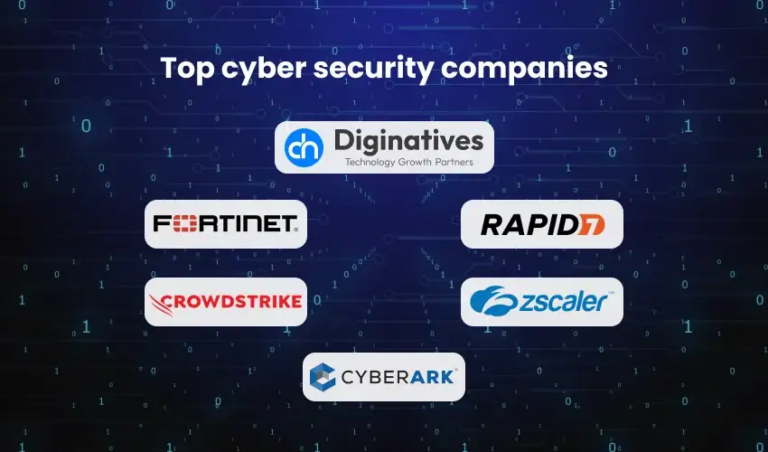
Diginatives
Diginatives specializes in AI implementation for SaaS companies and technology-driven businesses. Rather than lengthy strategy engagements, the firm leans into rapid prototyping followed by production-grade builds which means clients see working systems within months, not after a multi-quarter planning phase.
The team’s strength is generative AI applications intelligent content generation, automated customer support, AI-enhanced product features built on cloud-native architecture across AWS, GCP, and Azure. If you’re a startup or growth-stage company that needs a technical partner who ships rather than just advises, this is the profile to look for. See what Diginatives’ AI consulting services cover →
Accenture
Accenture runs one of the largest AI consulting practices globally, with thousands of specialists working across industries. That scale lets it deploy AI initiatives across multiple business units and geographies at the same time something smaller firms simply can’t match. Its Applied Intelligence practice combines strategy, technology, and operations into one end-to-end offering, backed by close partnerships with Microsoft, Google, and Amazon that give clients early access to emerging AI capabilities.
Best for: Large, multi-region enterprise transformation.
Deloitte
Deloitte pairs AI consulting with deep expertise in regulated industries financial services, healthcare, government. Its approach leans heavily on responsible AI: bias mitigation, regulatory compliance, ethical guardrails. That focus matters a lot if your organization operates under real oversight.
The firm also runs dedicated AI research labs building proprietary tools for common implementation challenges, and it tends to work best with clients after comprehensive, enterprise-wide transformation rather than a single isolated project.
Best for: Compliance-heavy, regulated sectors.
McKinsey & Company
McKinsey treats AI consulting as a strategy problem first. Through its QuantumBlack division, it blends traditional management consulting with data science, and engagements typically start by identifying the highest-value AI opportunities rather than jumping straight into a tech build.
Its strength is advanced analytics pricing, supply chain, operations optimization plus a heavy focus on executive education, so clients can sustain AI initiatives after the engagement ends. This one’s built for large enterprises with the budget and patience for a longer transformation arc.
Best for: Strategy-first, boardroom-level AI planning.
IBM Consulting
IBM brings decades of enterprise AI experience plus the watsonx platform, which is genuinely well-suited to hybrid cloud setups. Its consulting practice ties in closely with IBM’s own technology stack, but stays flexible enough to work across multi-cloud environments too.
Where IBM really stands out is hybrid cloud AI deploying across on-prem data centers and public cloud together which matters a lot for enterprises with heavy regulatory requirements or legacy infrastructure they can’t just rip out. Long-standing relationships in banking, insurance, and telecom back this up.
Best for: Regulated, hybrid-infrastructure enterprises.
PwC
PwC combines AI consulting with its audit and advisory background, which shows up clearly in its Intelligent Automation practice practical AI applications aimed at measurable efficiency gains, not experimental projects. Financial services, healthcare, and government are where it’s strongest, largely because those sectors sit right at the intersection of AI and regulatory risk.
The firm also maintains research partnerships with universities and tech vendors to stay current, and folds AI implementation into broader digital transformation work rather than treating it as a standalone initiative.
Best for: Risk-and-compliance-driven AI rollouts.
Boston Consulting Group (BCG)
BCG approaches AI the same way it approaches everything strategically, through its BCG X division, which pairs management consulting with technical implementation. The firm targets transformational business-model changes rather than incremental tweaks, with particular strength in consumer goods, retail, and industrial sectors.
Its engagements tend to emphasize building internal AI capability alongside the actual solution the goal being a lasting competitive advantage, not just a delivered project.
Best for: Strategic, industry-specific transformation.
Capgemini
Capgemini covers the full spectrum strategy through deployment through ongoing operations. Its Applied Innovation Exchange creates a collaborative space where clients prototype alongside Capgemini’s own engineers, backed by strong partnerships with cloud providers giving access to the latest platforms.
The firm is particularly strong in manufacturing, automotive, and telecom, where it combines AI with IoT and edge computing and it emphasizes proving ROI at each phase rather than asking clients to wait until the end to see value.
Best for: Manufacturing and industrial AI integration.
AI Implementation Approaches
Leading firms don’t all work the same way and understanding how they work matters just as much as what they claim to specialize in.
Strategy-First Consulting. Firms like McKinsey and Deloitte lead with comprehensive assessment before touching implementation. Good for organizations early in AI adoption that need clarity before committing resources though it does risk long planning phases without much real deployment to test assumptions against.
Implementation-Focused Consulting. Firms like Diginatives and other boutique specialists skip the extended planning and go straight to rapid prototyping. Working systems ship within months, and early projects surface real challenges that shape the broader strategy rather than the other way around. The tradeoff is less upfront coordination across business units.
Hybrid Consulting Models. Larger firms like Accenture and IBM combine both strategic direction and detailed technical deployment in one engagement. This suits large-scale, multi-geography transformations, but it comes with more complexity and a bigger budget requirement. Results tend to show up gradually, not as quick wins.
Agile AI Development. Some firms bring software-development practices into AI work iterative builds, frequent releases, continuous feedback. This fits organizations comfortable with uncertainty, since it acknowledges upfront that AI performance and business impact are genuinely hard to predict. Works especially well for applications where requirements evolve as the team learns what’s actually possible.
Key AI Capabilities to Evaluate
Not every consultancy is equally strong across every AI discipline so before you sign anything, check where a firm’s real expertise lies.
- Generative AI – Look for production experience, not just demos. Prompt engineering, response quality control, and cost optimization at scale separate real expertise from a slide deck. (For a full breakdown of what to check here, see our Gen-AI Vendor Capabilities Checklist.)
- Predictive Analytics – Still one of the highest-ROI applications of AI. Strong firms bring both statistical rigor and real business-domain knowledge, not just algorithm selection.
- Computer Vision – Relevant for quality inspection, document processing, and monitoring. Look for real experience with edge deployment and integration into existing hardware, not just model accuracy on a benchmark.
- Natural Language Processing – Powers chatbots, document analysis, and sentiment monitoring. The hard part isn’t the happy path it’s handling typos, abbreviations, and ambiguous phrasing that simplistic implementations fall apart on.
How to Choose the Right AI Consulting Partner
- Define clear objectives first. Identify the specific problem you want AI to solve not “we should probably be doing AI.” Vague goals lead to vague engagements.
- Check relevant experience. Generic AI expertise doesn’t translate cleanly across industries. A firm that’s great with retail clients might completely miss a healthcare compliance requirement.
- Evaluate the actual team, not just the firm’s brand. Ask who’s assigned to your project their background, past work, and technical depth matter more than the logo on the pitch deck.
- Match methodology to your situation. Strategy-first suits comprehensive transformation; implementation-focused delivers faster results for specific problems. Pick based on your timeline and risk tolerance, not what sounds most impressive.
- Ask about knowledge transfer. Good consulting builds your internal capability. If a firm’s model depends on keeping you dependent, that’s worth noticing before you sign.
If you’re leaning toward a smaller, dedicated technical partner instead of a large consultancy, our guide on hiring dedicated generative AI developers covers that path in more detail.
Measuring Success and Avoiding the Common Traps
A few things separate AI engagements that actually pay off from the ones that quietly become expensive learning experiences:
Set business metrics, not just technical ones. Model accuracy means little without revenue impact, cost reduction, or efficiency gains attached to it. Establish a baseline before implementation so you can actually measure the difference afterward.
Watch for technology-first thinking. If a consultancy leads with “here’s what AI can do” instead of “here’s the business problem we’re solving,” that’s a red flag. The good engagements start with the problem, then evaluate whether AI is even the right tool.
Don’t skip data readiness. Firms promising fast results without a real data assessment are setting expectations that data quality issues will eventually wreck. Quality partners evaluate this before committing to an approach.
Don’t treat change management as an afterthought. Technical deployment is only half the job user adoption and process integration determine whether the system actually gets used.
Track knowledge transfer. A successful engagement leaves your internal team more capable, not more dependent. If you can’t maintain or extend the system without ongoing consulting fees, something went wrong in the handoff.
The landscape itself keeps shifting too generative AI has pulled consulting focus toward foundation models and prompt engineering, and responsible AI (bias detection, explainability, regulatory alignment) is no longer optional as oversight increases globally. Firms that combine foundation-model fluency with real deployment experience are the ones worth paying attention to going forward.
Making the Right Call
Choosing an AI consulting partner is one of the decisions that quietly determines whether your AI budget turns into real competitive advantage or just an expensive lesson. The best engagements start with a clear business problem, realistic expectations, and a partner who treats the relationship as a partnership not a sales funnel.
Industry context matters too. Financial services need firms fluent in model risk management; healthcare needs HIPAA and clinical validation experience; manufacturing benefits from partners who understand operational technology, not just software. And for global organizations, geographic presence and local regulatory knowledge can matter as much as technical skill.
For businesses that want practical, fast-moving AI implementation rather than a multi-quarter strategy engagement, Diginatives builds working AI systems that generate real business value within months with a focus on leaving your team more capable, not more dependent.
AI – Powered Products. Measurable Impact.
Recognized by DesignRush
We’re always glad when the work we put in gets noticed and it means a lot when a trusted industry platform takes note too. Diginatives has been recognized as a DesignRush Verified Agency, a nod to the quality and consistency we bring to every project we take on. It’s a reflection of the trust our clients place in us, and it pushes us to keep raising the bar for what a modern IT services partner should look like.
Discover more from Diginatives
Subscribe to get the latest posts sent to your email.