The way we work has changed. People work from different locations, applications run on multiple clouds, and data is exchanged between internal and external platforms on a daily basis.That’s why perimeter-based approaches to security are no longer sufficient.A user in an office is no different from a remote worker. A contractor might need access to one application, while a service account is constantly communicating with a database.It’s a distributed environment, which is why organizations need to think about different ways to secure their data and infrastructure.
What Is Zero Trust Security?

If you’re wondering what is zero trust security, it’s a method that doesn’t inherently trust any connection, user, device, or application.Each request is analyzed in terms of risk before being granted access.This doesn’t mean users have to re-authenticate every time they open a file.It means organizations use a combination of factors to understand what a user is attempting to do and how much access they should have.For example, if an employee usually accesses an application from their company laptop, but suddenly tries to access sensitive data from a different device, that request might be denied or require additional authentication. The underlying principle is simple: trust should be continuously verified and not assumed.
Why Traditional Perimeter Security Is No Longer Enough
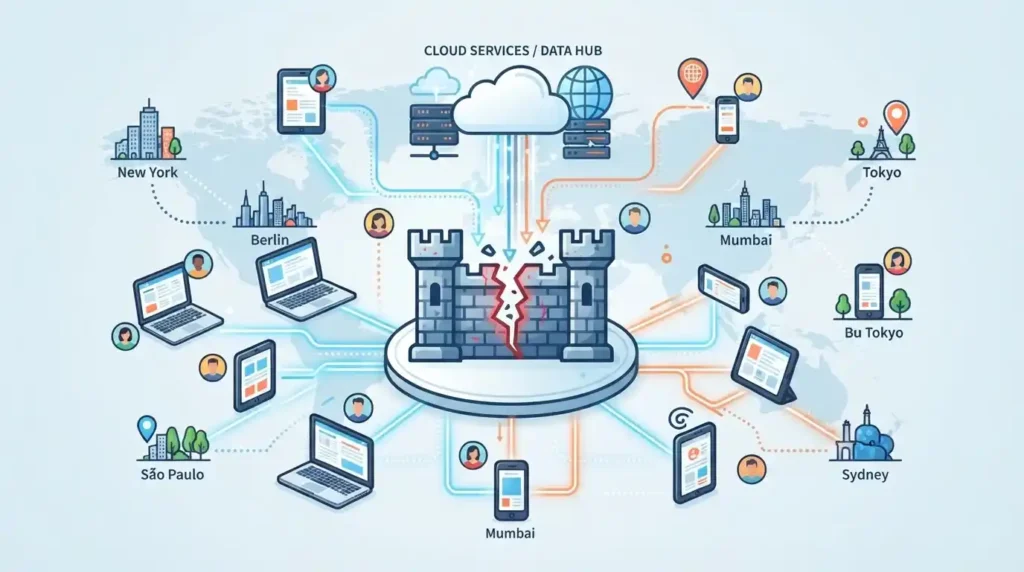
In the past, traditional network security was built around a simple idea: users inside the corporate network were more trustworthy than those outside.It wasn’t an unreasonable assumption, given that most users were employees working from company headquarters and applications existed on internal servers.The modern enterprise is more distributed. Users work from home, at airports, at client locations, and on mobile devices.Applications are often hosted on third-party clouds.Partners need access to specific applications. Employees use SaaS applications that exist on the internet.A network perimeter is no longer sufficient to represent the level of security risk.
Identity Is a Critical Security Layer
Modern organizations are built around identity. Access to applications and data is controlled at the identity level. That means organizations can think about access in terms of: • Who is trying to access what? • What device are they using? • What level of permissions do they have? • Is the request abnormal in any way? • What is the sensitivity level of the data?
Least Privilege Is the Norm
Another principle that makes approach work is least privilege.Users should only have access to the data and applications they need to do their job.An employee shouldn’t be able to export an entire database just because they can view it.A developer working on a testing environment doesn’t need access to production systems.Limiting access reduces risk and the impact of security incidents.
How Does a Zero Trust Architecture Work?
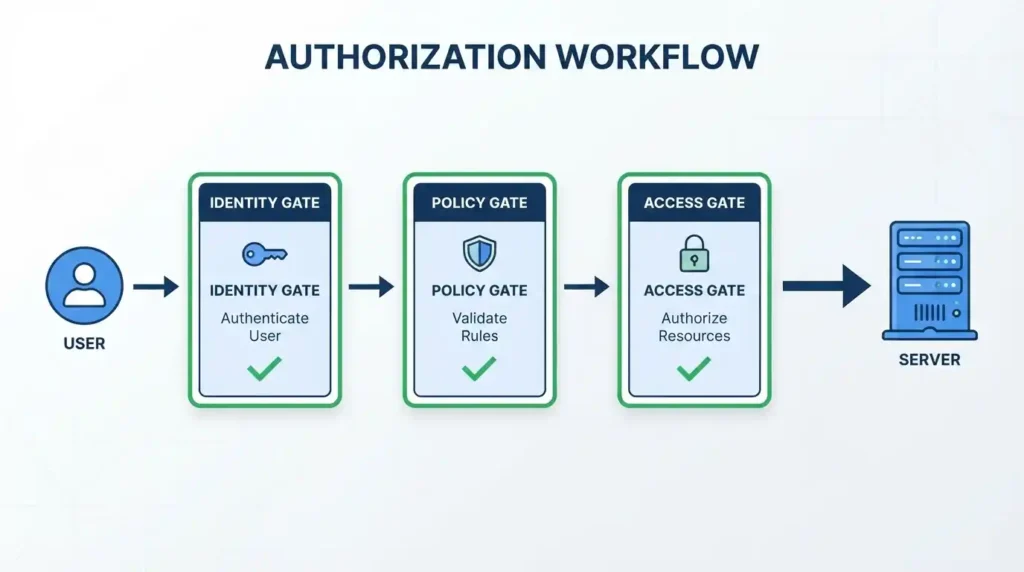
A zero trust architecture is built around a combination of factors, not just one. Each request is assessed in terms of user, device, application, permissions, and policies. This approach access control model might look like this:
User or application –> identity –> policy –> access –> continuous monitoring This model closely follows the guidance laid out in the NIST Special Publication 800-207 on Zero Trust Architecture.
Verify the Identity
The first step is to verify that the user is who they claim to be.This could be done with passwords, authenticator applications, certificates, hardware tokens, and other security measures.Higher-value resources might require stronger authentication.
Evaluate the Device
The device is another factor that informs the decision, but it’s not as simple as “is this device on the corporate network?”The organization might also evaluate whether the device is managed, up-to-date, encrypted, and otherwise trustworthy.A company laptop will be treated differently from an unmanaged device.
Consider the Resource
Not all resources are equal.A public-facing web page doesn’t contain sensitive data, but a financial database does.That’s why policies need to consider the resource and its sensitivity level.
Apply the Appropriate Permission
Based on the information from other steps, the system will either allow or deny the request.More granularly, it will apply the appropriate permission level.A user might be able to view a system, but not make changes to it.Another employee might have more permissions because of their role.
Continue Monitoring
The conversation isn’t over when access is granted or denied.The user might change their behavior, location, or device.The device might also change, or the request might be abnormal in other ways.This is where continuous verification helps.It doesn’t mean the user has to re-authenticate every time something changes.It means the system has the context to understand whether the change is suspicious.
What Are the Main Components of a Zero Trust Security Model?
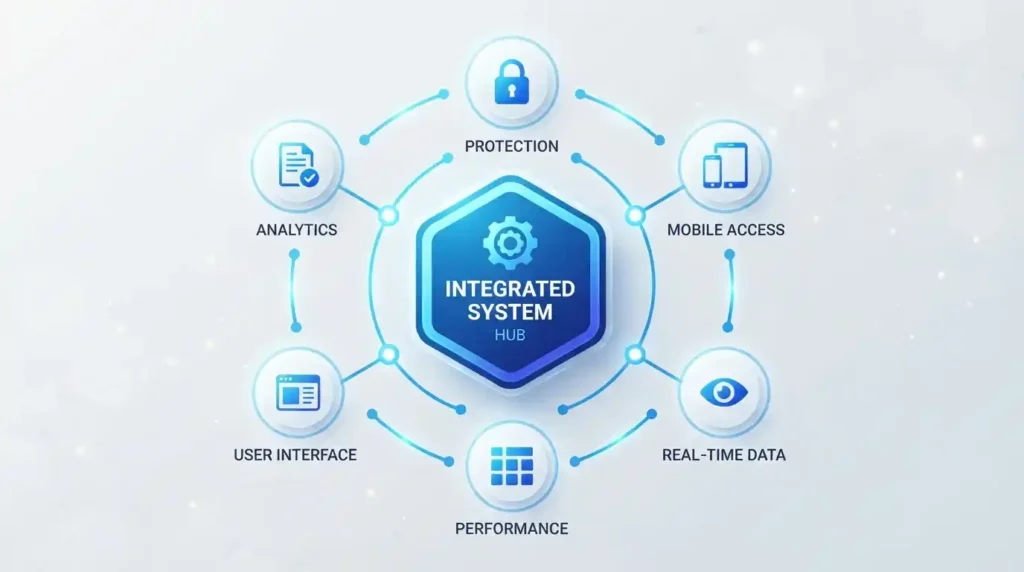
Its security model isn’t a single product.It’s a set of components that help organizations implement the zero trust principles.
Strong Authentication
User authentication is one of the most important pillars of this approach.Multi-factor authentication is often required, and more sensitive accounts might have stricter requirements.
Access Policies
Policies define what users can and cannot do.They’re applied based on user roles, devices, applications, and other factors.It’s important to follow the principle of least privilege and only grant the permissions that users need.
Device and Endpoint Visibility
Devices are another critical layer in this approach architecture.An organization needs to understand what devices have access to its systems and data.Endpoints might be monitored for suspicious behavior and compliance with security policies.
Application Protection
Applications should also follow its principles.Authentication, authorization, data security, and configuration all contribute to the overall security posture.A strong application is less likely to be exploited, contain vulnerabilities, or expose sensitive data.
Monitoring and Analytics
Logs and analytics are essential for detecting suspicious behavior.Unusual activity can trigger alerts, which can then be reviewed by security analysts.It can be as simple as noticing that an account is attempting to access systems it hasn’t used before.
Microsegmentation
Microsegmentation is another way to reduce the attack surface.Instead of allowing free movement across the network, organizations segment their systems and only allow communication between approved nodes.It makes it harder for attackers to move laterally and compromises one part of the network.
Understand Who Needs Access
It’s also important to understand who has access to those resources.An inventory of users, applications, and service accounts should be created, along with their permissions.It will help identify gaps in security and unnecessary access.
Strengthen Authentication
Authentication should be strengthened, particularly for high-value accounts and resources.More sensitive accounts might require multi-factor authentication or other security measures.Conditional access can also be used to grant or deny access based on specific conditions.
Segment Important Systems
Systems with sensitive data and applications should be segmented to reduce the risk surface.It doesn’t mean they’re inaccessible, but unauthorized users shouldn’t be able to freely interact with them.
Measure the Results
A zero trust implementation should have specific, measurable goals. Some examples include: The number of unnecessary permissions removed The number of high-value accounts protected The number of critical systems using stronger authentication How quickly access can be removed when an employee leaves The number of sensitive applications with conditional access It helps to have specific language about what has been achieved, rather than vague statements about implementing zero trust.
Best Practices for 2026

Organizations that want to implement best practices 2026 should focus on improving the decision-making process around access.There are several best practices that are useful in any zero trust implementation.
Prioritize Identity
Make sure to understand which identities are requesting access to resources.It includes users, devices, applications, and service accounts.
Use Least Privilege
Only grant the access that users need to perform their jobs.Avoid giving broad permissions just because it’s convenient.
Protect Privileged Accounts
Administrative accounts and other privileged identities should have stronger security controls.
Use Risk-Based Decisions
Normal requests from trusted devices aren’t inherently suspicious, but they should still be evaluated.Risk-based decisions allow organizations to balance security and usability.
Keep Policies Simple
Complicated policies that few people understand are more likely to have vulnerabilities.Make sure policies are easy to maintain and don’t have unnecessary exceptions.
Review Permissions Frequently
User permissions shouldn’t be static – they should change as responsibilities change.Frequently review permissions to ensure they’re still appropriate.
Don’t Forget About Service Accounts
Service accounts are often overlooked, but they can be used to grant extensive access to systems and data.Make sure they’re secured and reviewed regularly.
Monitor What Happens After Access Is Granted
A user has been authenticated and authorized to access a resource.That doesn’t mean everything they do is appropriate, which is why continuous monitoring is necessary.The goal isn’t to constantly ask users to re-authenticate.It’s to make sure their behavior isn’t suspicious or abnormal.
What Enterprise Security Teams Should Prioritize
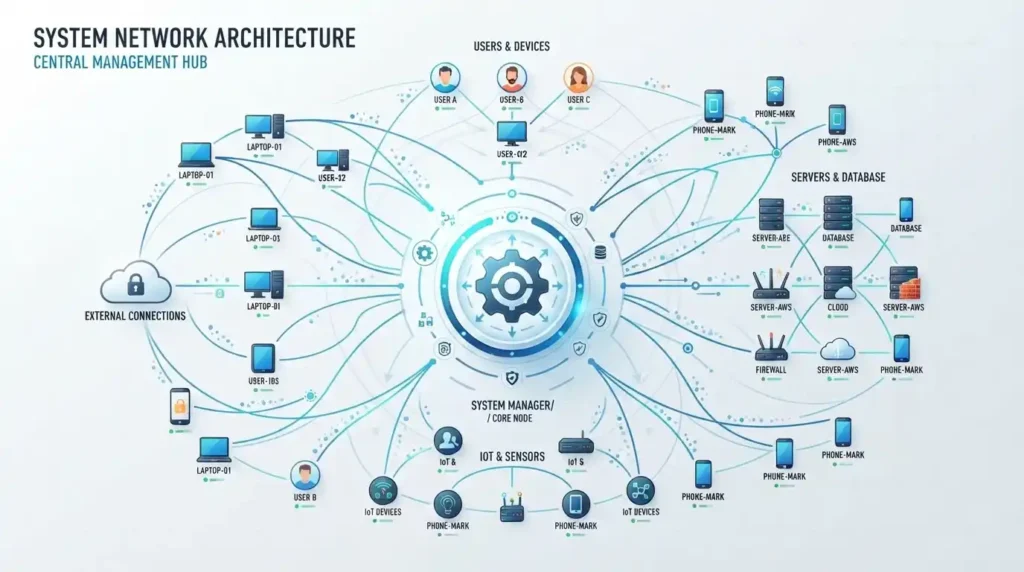
For enterprise zero trust security, scale is an important consideration.Large organizations have thousands of users and hundreds of applications.They also have multiple cloud environments and thousands of third-party relationships.Its implementation can’t rely on people to manually approve or deny each request.Automation is essential for enterprise zero trust security.It helps to automate repetitive tasks, such as provisioning and de-provisioning user accounts.It also helps to monitor devices for compliance and apply policies consistently.
Frequently Asked Questions
What is Zero Trust Security?
It is a security model that doesn’t assume trust based on location and evaluates each request individually.
Is Zero Trust only for large companies?
No, organizations of all sizes can benefit from the their model.
What is Network Access?
Its Network Access is a zero trust implementation that enables selective access to applications and resources.
Does Zero Trust replace a firewall?
Not necessarily. Firewalls and other network security tools can be used alongside its security.
How long does implementation take?
There is no standard timeline for zero trust implementation. It depends on the organization’s size, IT environment, and security needs.
Is continuous verification the same as asking for MFA every time?
No, continuous verification can take many forms, and not all of them involve repeated MFA prompts.
What is the biggest challenge of this approach?
The biggest challenge is understanding the current environment, including users, devices, applications, and access. Without that visibility, it can be difficult to make informed security decisions.
Does this approach improve remote-work security?
Yes, because it doesn’t rely on users being on a secure, internal network.
Conclusion
The modern enterprise is challenging to secure because of the distributed nature of the workforce and the use of cloud applications.A traditional network perimeter is no longer sufficient, which is why organizations are turning to zero trust security.It doesn’t rely on users being on a secure network – it evaluates each request individually and only grants access when appropriate.its implementation doesn’t have to be immediate or overwhelming.
Organizations can start with the most sensitive resources, strengthen authentication, reduce excessive permissions, and protect privileged accounts.The ultimate goal is to make sure the right people have the right access at the right time.That approach should be informed by a rich set of signals, including identity, device, application, and resource information.It should also be dynamic and continuously updated to reflect the latest security insights.
Discover more from Diginatives
Subscribe to get the latest posts sent to your email.