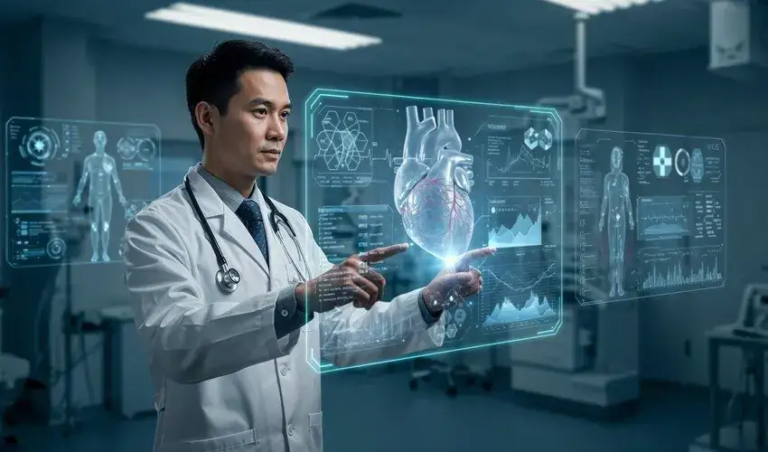
Data science is revolutionizing healthcare by improving diagnostics, enhancing patient outcomes, optimizing hospital operations, and enabling predictive analytics that help clinicians make faster, more accurate, and personalized medical decisions.
Introduction
Data science is transforming the healthcare industry at an unprecedented pace. From predictive analytics to personalized treatment plans, its influence can be felt across hospitals, research institutions, and digital health platforms. As the demand for smarter, more efficient medical solutions continues to rise, the role of data science in healthcare innovation has become central to improving patient outcomes and operational efficiency.
Improving Diagnostics Through Predictive Analytics
One of the most powerful uses of data science in healthcare is predictive analytics. By analyzing large datasets, such as medical histories, lab results, and imaging data, advanced algorithms can identify early signs of disease long before symptoms appear. Predictive models help clinicians assess risks for conditions like diabetes, heart disease, or cancer. Early detection not only improves survival rates but also reduces long-term treatment costs. For healthcare providers, this means faster decision-making and more accurate diagnoses.
Personalized Medicine and Tailored Treatments
Data science enables personalized medicine, a breakthrough in modern healthcare. Instead of relying solely on general treatment guidelines, physicians can provide customized care based on a patient’s genetic makeup, lifestyle, and real-time health data. Machine learning models can identify which therapies are most likely to succeed for a particular patient, reducing trial-and-error prescribing. This approach enhances treatment effectiveness and minimizes adverse reactions.
Enhancing Hospital Operations and Efficiency
Beyond clinical care, data science plays a vital role in optimizing hospital operations. Predictive algorithms can forecast patient admissions, helping hospitals allocate resources and reduce overcrowding. Data-driven scheduling tools improve staffing efficiency, while analytics can identify bottlenecks that slow down care delivery. Healthcare administrators rely on these insights to enhance workflow, boost productivity, and decrease operational costs, key factors in today’s competitive healthcare landscape.
Advancing Medical Research and Drug Development
Data science is also reshaping drug discovery and clinical research. Using AI and machine learning, researchers can analyze vast biomedical datasets to identify potential drug candidates more quickly than ever before. Algorithms help detect molecular patterns, predict drug behavior, and even simulate clinical outcomes. This accelerates the development of lifesaving therapies and reduces the time it takes for new treatments to reach the market.
Enabling Telehealth and Remote Monitoring
In the age of digital transformation, telehealth and wearable technologies rely heavily on data science. Real-time data from smart devices allows clinicians to monitor chronic conditions remotely, detect anomalies, and intervene early. These tools empower patients to take control of their health while enabling continuous, data-driven care.
AI – Powered Products. Measurable Impact.
Conclusion
Data science is a driving force behind healthcare innovation, enhancing diagnostics, personalizing treatments, improving operations, and fueling medical research. As technology evolves, its role will only continue to grow, shaping a smarter, more efficient, and more patient-centered healthcare future.
Frequently Asked Questions (FAQs)
Why is data science important in healthcare?
Data science improves diagnostics, personalizes treatment, optimizes hospital operations, and enhances predictive capabilities.
How does data science support patient care?
It helps clinicians make informed decisions using data-driven insights from medical records, imaging, and wearable devices.
What technologies are commonly used in healthcare data science?
Machine learning, AI, predictive analytics, natural language processing, and big data platforms.
Is data science used in preventive healthcare?
Yes. It tracks trends, identifies risk factors, and supports early intervention strategies to improve public health outcomes.
Ready to harness the power of data science for healthcare innovation? Explore advanced analytics solutions today and transform your organization’s clinical and operational performance.
Discover more from Diginatives
Subscribe to get the latest posts sent to your email.