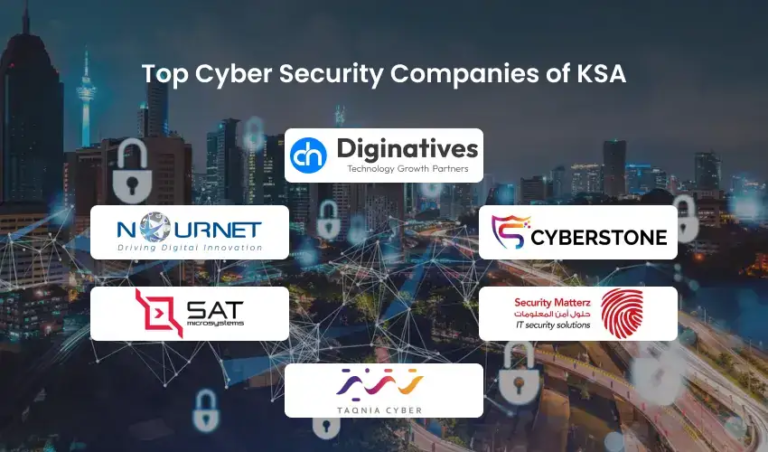
Finding the right fit among the many cybersecurity companies in Saudi Arabia starts with understanding just how much the market has grown. Cybersecurity spending in Saudi Arabia has crossed into serious economic territory. The National Cybersecurity Authority’s (NCA) 2025 economic indicators report puts the Kingdom’s cybersecurity market at SAR 15.2 billion for 2024, a 14% jump from the year before, with private companies responsible for close to two-thirds of that spend. On the global stage, Saudi Arabia holds the 2nd spot on the ITU’s Global Cybersecurity Index a ranking that reflects years of investment in regulation, training, and enterprise adoption, not a one-off achievement.
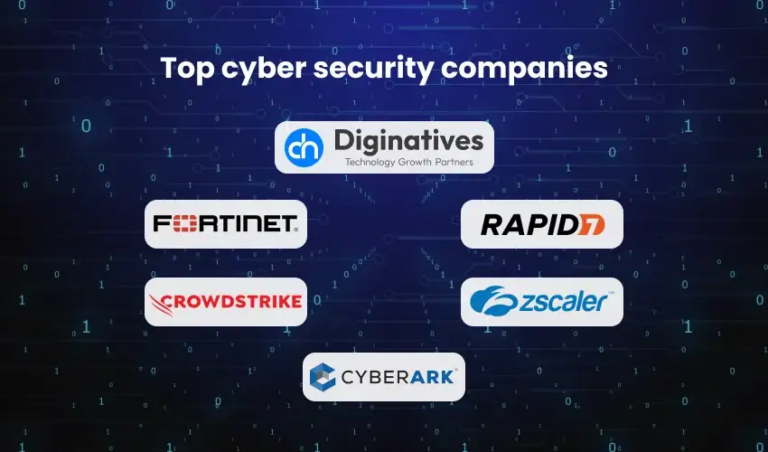
Growth like that pulls in competition. By the NCA’s own count, more than 350 registered cybersecurity providers were operating in the Kingdom by the end of 2023. Ask around and you’ll hear the same handful of names repeated, along with dozens more claiming the “best in KSA” title. Sorting through that is the actual problem most buyers face. Below are 26 companies currently active in the Saudi market, along with what each one is built around, who tends to hire them, and where they stand out from the pack.
A quick word on how this list came together: we looked at market tenure, the breadth of what each company actually delivers (VAPT, compliance advisory, managed security, SOC, incident response), certifications on record (ISO 27001, CREST, and similar), and how active each firm is across KSA’s sectors. Diginatives is on this list too — we’re saying that upfront rather than burying it, so you can factor it in however you like.
Table of Contents
- Introduction
- Quick Comparison Table
- Full List of Cybersecurity Companies in KSA
- How to Choose the Right Cybersecurity Partner
- Conclusion
- FAQs
Quick Comparison Table
| # | Company | Best For | Key Specialty |
|---|---|---|---|
| 1 | Diginatives | Businesses that want compliance and technical testing handled by one team | SAMA/NCA compliance, VAPT |
| 2 | Security Matterz | Companies that don’t want to split testing and incident response across vendors | Digital forensics, incident response |
| 3 | SATMZ | Enterprises with standards-heavy network protection needs | Regulatory-aligned security |
| 4 | CyberStone | Sectors that need to see how they’d hold up under a real attack | Red teaming, adversarial emulation |
| 5 | Nournet | Large organizations juggling hybrid cloud and on-prem systems | Infrastructure risk assessment |
| 6 | Microminder | Startups and enterprises that want certified, hands-on advisory | ISO 27001, CREST |
| 7 | Taqnia Cyber | Organizations after a long-term advisory relationship, not a one-off job | SOC services, threat intelligence |
| 8 | Qualysec | Teams that want testers working alongside them, not just handing over a PDF | VAPT |
| 9 | Cyberum | Companies building security in from the start of a new system | Security architecture design |
| 10 | ZOOM IT Solutions | Government and commercial clients wanting a custom risk plan | Accredited technical staff |
| 11 | Looptech | Businesses wanting several security layers from a single vendor | SIEM, cloud security |
| 12 | Infratech | Security work bundled into a larger infrastructure overhaul | Managed security, forensics |
| 13 | Cipher | Companies that value region-specific threat data | GRC evaluations |
| 14 | Wattlecorp | SMBs wanting solid testing without an enterprise price tag | Penetration testing |
| 15 | Aujas Cybersecurity | Organizations overhauling identity and access controls | Zero-trust, IAM automation |
| 16 | Raqmiyat | Businesses building a security framework from zero | Security operations management |
| 17 | CyberKSA | Legal, government, and law enforcement clients | Digital forensics, litigation support |
| 18 | Fast Digital Technology (FDT) | Businesses that want recognized platforms, not custom-built tools | IBM, Splunk, BeyondTrust integrations |
| 19 | Defense Cybersecurity | Programs that need people and process fixed, not just tech | Risk evaluation, governance |
| 20 | ISA Cybersecurity | Businesses that want security framed as ROI, not overhead | Adaptive security posture |
| 21 | Aristame | Manufacturing, energy, and utility operators | ICS/OT security |
| 22 | Cyberami | Clients who don’t want a one-size-fits-all package | Training, managed operations |
| 23 | Cyberani | Large, regulated government and industry players | National-scale cyber resilience |
| 24 | Innovative Solutions | Teams tracking how fast they actually detect and respond to incidents | MTTD/MTTR reduction |
| 25 | Al-Falak | Organizations whose first priority is passing an audit | Security audits |
| 26 | Elm Company | Businesses that want a human-plus-tech approach, not just software | Custom security programs |
Note: “Best for” is based on each company’s publicly stated focus, not an independent performance test. Confirm current certifications and scope directly with the vendor before you sign anything.
Introduction
There was a time cybersecurity sat quietly in the IT department’s budget line. That’s not the case in Saudi Arabia anymore. Between NCA and SAMA compliance requirements now touching banking, healthcare, telecom, and government alike, security has moved into board-level conversations, and companies are setting aside dedicated budgets for it instead of patching things together after the fact.
The hard part isn’t deciding to invest, it’s figuring out who to invest with. Some firms are boutique operations built around one niche, like ICS/OT security. Others run full 24/7 SOCs and cover nearly everything. What follows breaks each one down by what actually matters when you’re comparing options: which sectors they know well, how deep their service list goes, and where their compliance expertise sits.
List Of The Top 26 Cybersecurity Companies in Saudi Arabia
1. Diginatives
Disclosure: this is our company. Diginatives works with SMBs and enterprises across a range of industries, covering both compliance and technical security under one roof. That includes SAMA compliance advisory, NCA compliance readiness, GDPR alignment, cloud and infrastructure assessments, VAPT, and security awareness training built for internal teams.
2. Security Matterz
Vulnerability assessments, managed security, digital forensics, incident response Security Matterz runs all of it through an in-house team rather than farming pieces out to subcontractors. That matters if you want one point of contact handling both the prevention side and the “something just went wrong” side.
3. SATMZ (SAT Microsystems)
SATMZ built its practice around helping companies prove compliance with current KSA standards. Most of their clients are mid-to-large enterprises more concerned with locking down networks and data long-term than running a quick one-time test.
4. CyberStone
CyberStone runs adversarial emulation, red teaming, and malware analysis — basically, they try to break in the way a real attacker would, instead of running through a checklist. Their client list leans toward telecom, oil and gas, transportation, and healthcare, where downtime and asset security carry real financial weight.
5. Nournet
Two decades in, Nournet still runs deep infrastructure assessments for a client base that includes healthcare providers, retailers, and banks. They work across both cloud and on-premise setups, which counts for a lot if your organization hasn’t fully migrated one way or the other.
6. Microminder Cyber Security
ISO 27001 and CREST-certified, Microminder splits its client base between tech startups and large enterprises. Where they add value is strategic advisory — walking clients through compliance while untangling infrastructure that’s often carrying years of legacy baggage.
7. Taqnia Cyber
Riyadh-headquartered, Taqnia Cyber leans consulting-first, with SOC services, risk management, and threat intelligence as its core offerings. If you want a vendor relationship that lasts beyond a single project, this is the kind of firm people usually mean.
8. Qualysec
VAPT is Qualysec’s whole game — vulnerability assessment and penetration testing done with the client team in the room, not from a distance. The goal is finding exploitable gaps and actually closing them, not just producing a report and moving to the next job.
9. Cyberum
Cyberum treats security as an ongoing lifecycle instead of a single event, which shows up in how they structure engagements: ethical hacking, risk assessment, vulnerability testing, and architecture design, aimed at companies that want security baked in from day one.
10. ZOOM IT Solutions
ZOOM works across both government and commercial accounts, backed by staff holding recognized industry accreditations. Their process starts with understanding a client’s specific risk exposure before anything gets recommended no pre-packaged bundles.
11. Looptech
Looptech’s client base stretches across the Middle East and GCC, with a service list covering web application firewalls, network and cloud security, penetration testing, infrastructure monitoring, and SIEM. Good option if you’d rather not stitch together five vendors for five layers of protection.
12. Infratech
Infratech handles both government and private-sector clients, offering incident response, forensics, managed security, and training. They also do broader IT infrastructure consulting, which is useful if your security work is really one piece of a bigger modernization project.
13. Cipher
What sets Cipher apart is shared threat intelligence — regional incident data that a lot of global feeds simply don’t capture. Their core services are penetration testing, vulnerability assessments, and GRC (governance, risk, compliance) evaluations, scoped by industry and company size.
14. Wattlecorp Cybersecurity Labs
Built around ethical hackers and security strategists, Wattlecorp covers penetration testing, risk and compliance consulting, and vulnerability assessment. They’re a reasonable pick if you want solid technical testing without committing to an enterprise-scale retainer.
15. Aujas Cybersecurity
Aujas covers networks, mobile devices, and cloud environments, with a heavy lean toward zero-trust architecture and automated identity and access management. Makes sense for organizations mid-overhaul on how they manage who has access to what.
16. Raqmiyat
Riyadh-based Raqmiyat covers security operations management, data protection, identity and access management, and security audits. Where they’re strongest is building a security framework from scratch for organizations that don’t have mature processes in place yet.
17. CyberKSA
Around since 2014, CyberKSA carved out a narrower niche than most names on this list: high-tech crime investigations, digital forensics, and litigation support. Their clients tend to be legal teams, law enforcement, and government bodies needing expert witness support alongside standard testing work.
18. Fast Digital Technology (FDT)
Instead of building everything in-house, FDT partners with established vendors – IBM, Delinea, BeyondTrust, Splunk among them , to deploy enterprise-grade tools. Good fit if you’d rather work with recognized platforms than something custom-built.
19. Defense Cybersecurity
Defense Cybersecurity’s approach is methodical: risk evaluation, compliance and governance advisory, and awareness programs, with people and process treated as seriously as the technology itself.
20. ISA Cybersecurity
ISA’s whole pitch rests on the idea that static defenses age badly threats shift, so the approach needs to shift with them. They frame security spend as something that shows up in fewer incidents, better metrics, and protected reputation, not just a cost center.
21. Aristame
Few firms on this list touch ICS/OT (industrial control systems and operational technology) security the way Aristame does. That makes them relevant specifically for manufacturing, energy, and utility operators, where standard IT security tools often don’t translate well.
22. Cyberami
Training, consulting, managed security operations Cyberami’s model is built around shaping each engagement to the client’s actual infrastructure rather than running the same package across every account.
23. Cyberani
A Saudi Aramco subsidiary, Cyberani works with government agencies and major industry players, with a mandate around setting the benchmark for national cyber resilience. Their backing and scale put them in a different weight class from most boutique firms.
24. Innovative Solutions
Innovative Solutions Managed Security focuses squarely on Mean Time to Detect and Mean Time to Respond the two numbers that actually tell you how fast a security program reacts when something real happens, whether it’s on-premise or in the cloud.
25. Al-Falak
Al-Falak’s consulting practice centers on compliance services and security audits, aimed at organizations where passing regulatory review is the first and most urgent priority.
26. Elm Company
Elm treats cybersecurity as more than a technology purchase, pairing tools with a team that works directly with client organizations to build security programs around how they actually operate, not a generic template.
How to Choose the Right Cybersecurity Partner
Before you shortlist anyone, run the decision through a few practical filters:
- Sector fit. A firm that’s strong in ICS/OT, like Aristame, isn’t who you want for SAMA compliance at a fintech and the reverse is just as true.
- Certifications. ISO 27001, CREST, or an equivalent should be non-negotiable if you’re in a regulated industry.
- Compliance work vs. technical testing. Some firms live in audits and governance; others live in pen testing and red teaming. Plenty of organizations end up needing both, sometimes from two different vendors.
- Ongoing relationship vs. one-time job. Decide upfront whether you want a retainer-based SOC setup or a single assessment.
- Size match. A boutique consultancy can usually move faster for an SMB. A firm with government-scale infrastructure, like Cyberani, tends to fit large regulated enterprises better.
Conclusion
There’s no single “best” cybersecurity company in KSA there’s whichever one fits your industry, size, and risk profile best. Treat the breakdowns above as a starting filter, shortlist two or three names, and ask each one for a scoped proposal against your actual environment before you commit to anything.
FAQs
What is cybersecurity?
It’s the set of policies, technologies, and practices organizations use to prevent cyberattacks and limit the fallout when one gets through.
What does a cybersecurity solution provider actually do?
They look at an organization’s systems for weak points, put protective measures in place, and often stay on for ongoing monitoring or incident response to keep breaches, theft, or system compromise from spiraling.
Why does Saudi Arabia treat cybersecurity as such a priority?
The Kingdom has poured serious money into national cybersecurity infrastructure and regulation the NCA and sector-specific frameworks like SAMA for finance are the clearest examples. Combine that with a steady volume of targeted attacks in the region, and it’s not surprising that both government and private-sector organizations have made dedicated security budgets and compliance programs a fixture rather than an afterthought.
What are the main types of cybersecurity?
- Network security
- Cloud security
- Endpoint security
- Mobile security
- IoT security
- Application security
- Zero trust security
How do I know if a vendor’s actually a good fit before signing anything? Ask for references from clients in your specific industry, double-check that their certifications are current, and push for a scoped proposal or sample assessment before you commit to a long-term retainer.
Looking for a compliance-first or technical-testing partner in KSA? Explore our VAPT and security audit services or get in touch to talk through what you actually need.
Discover more from Diginatives
Subscribe to get the latest posts sent to your email.