SaaS applications are used to perform hundreds of day-to-day business functions: collaborating and storing information, analyzing financial data, organizing customer databases, project management, Human Resources, and countless other activities. While the benefits of utilizing Software-as-a-Service (SaaS) platforms are evident, traditional security practices have a hard time keeping up with the dynamic nature of these applications.
An employee can access a third-party application, change a sharing setting in an external collaboration tool, add a new integration, or expose critical information, and the security teams might not know about it right away. This is why SaaS Security Posture Management has become such an important security discipline: it helps security teams identify risky configurations, excessive permissions, connected third-party applications, compliance concerns, and other potential threats.
What Is SaaS Security Posture Management And Why Should You Care?
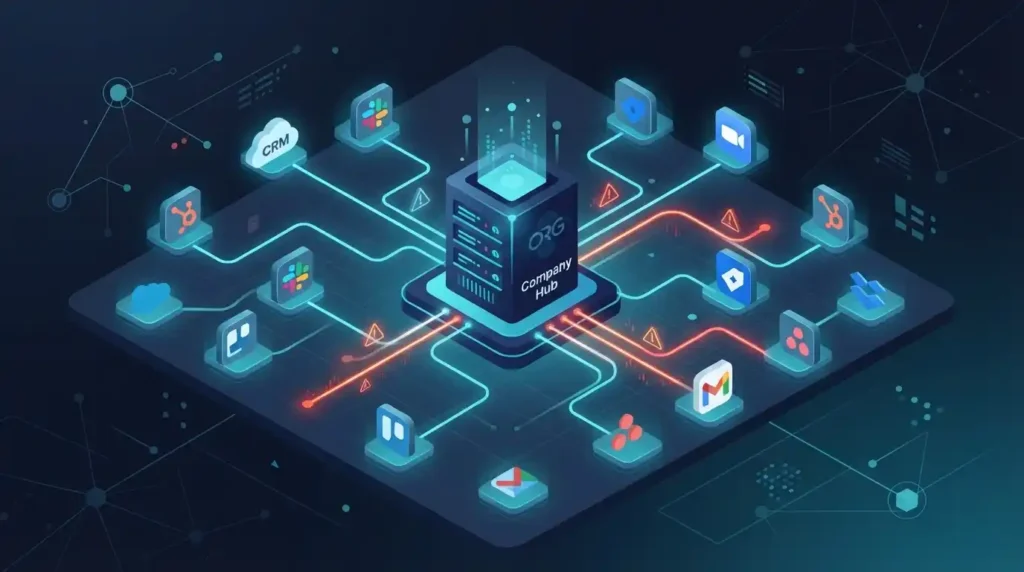
SaaS Security Posture Management or SSPM is an iterative process that aims to discover and remediate potential security threats in SaaS applications. It helps security teams understand what configuration changes can affect software as a service, who can access these applications, which third-party tools are integrated, and if the critical security features are properly configured and monitored.
Some of the examples of potential threats include:
- User permissions
- Insecure authentication settings
- Exposed data
- Risky third-party applications
- Inactive user accounts
- Sharing policy misconfigurations
- Other security-related concerns.
The Hidden Risks Lurking in Every SaaS Environment
One of the main application challenges is ensuring the safety of an environment where interdependent applications are used: multiple individuals and teams utilize various software as a service platforms. The responsibility for the security of these applications is distributed: end-users, administrators, developers, vendors, and automated processes all make changes to the environment.
A marketing employee might add a new application to boost productivity; a developer could grant an external service access to a collaborative platform; an administrator might update the security settings. While each of these actions individually might not present a severe threat, the combined impact of such changes could create serious security concerns.
Real-World Risk Examples You’ve Probably Already Missed
Some application risks originate from generic and easy-to-make mistakes. An employee might have unnecessary access to a specific database or a group of files; a former employee’s account might still be active; a third-party application might hold too many permissions after being granted access to the organization’s environment; a file or a database might be shared externally, making it available to unauthorized users. The most prominent application risks include misconfigured settings that lead to the exposure of sensitive data and provide threat actors with increased opportunities to attack the organization’s applications and data.
For a deeper look at how these gaps get discovered systematically, run a dedicated vulnerability assessment and see how it differs from ongoing posture monitoring.
SaaS Misconfiguration Management: Closing the Gaps Attackers Love Most
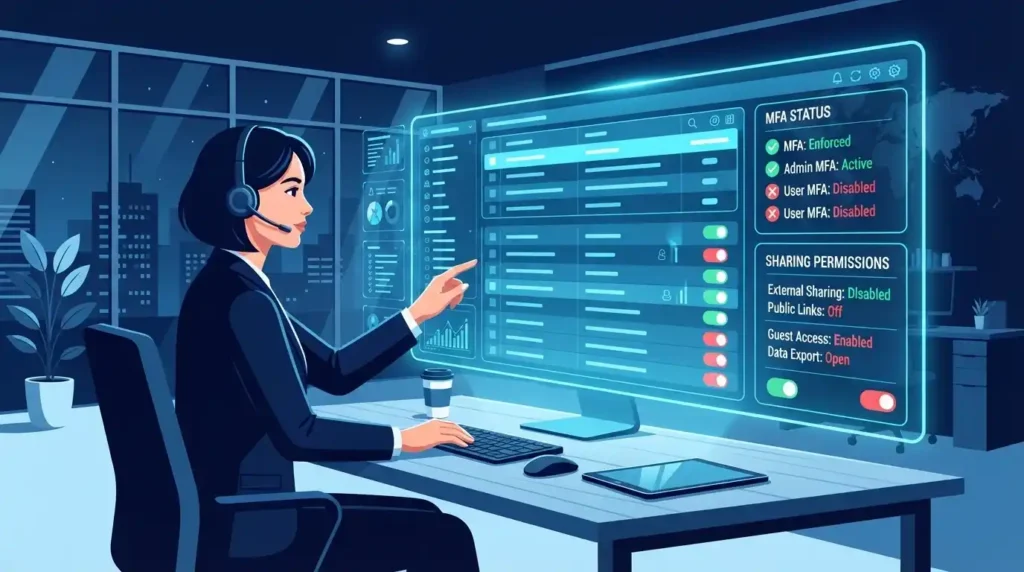
SaaS misconfiguration management refers to the continuous process of discovering and resolving improper settings within the applications utilized by an organization. A security team should establish essential configurations and ensure that no applications deviate from these policies. For instance, a security team might identify that for one of their SaaS applications:
- Multi-factor authentication is not enabled for specific users;
- Data sharing settings allow external collaboration;
- An administrator possesses unfettered access to all data;
- An authorized third-party application has too many permissions;
- Logging and monitoring features are disabled, etc.
The key point is that such misconfigurations are typically discovered dynamically by either the users or the security teams.
Why SaaS Security Is Really an Identity Problem in Disguise
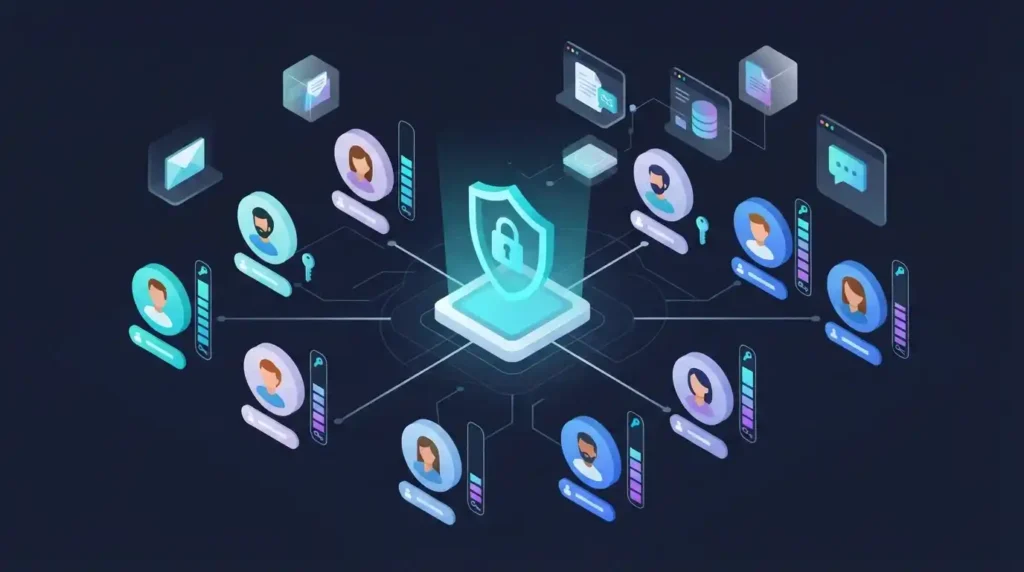
Most of the security concerns stemming from Application Security environments originate not from the applications themselves but from users. A compromised identity can be a major security threat if it is granted access to critical data or has too many permissions. That is why aside from monitoring the security posture of applications, organizations should pay specific attention to user accounts, their roles, and the data these users can access.
Key SaaS security questions related to identities include:
- Who has access to the application?
- Does the user have too many permissions?
- What other tools is the application integrated with?
- Are there any inactive accounts?
- Are users following the proper authentication rules?
- Are service accounts utilized correctly?
- Etc.
How SSPM Gives Security Teams the Visibility They’ve Been Missing
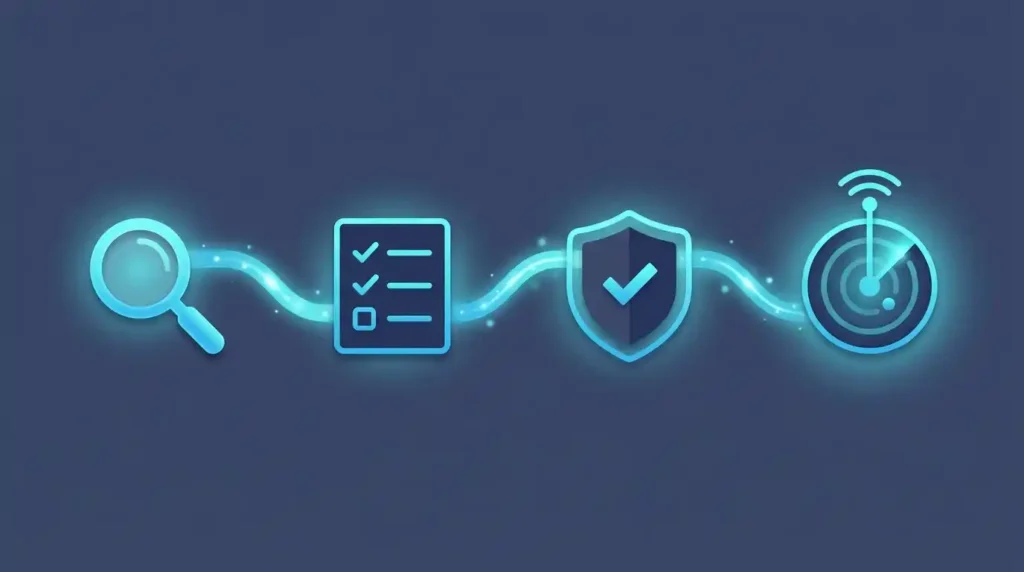
A typical SaaS security posture management guide would suggest that the first step to a secure SaaS environment is visibility: prior to resolving any SaaS-related security issues, a security team should detect and document all the relevant data related to these applications. It includes monitoring the SaaS applications utilized by the organization, determining which users have access to these applications, assessing their permissions, and collecting all relevant information regarding the security settings and configurations of these applications.
The presence of tens or hundreds of SaaS tools makes the task of evaluating their security posture challenging individually: it would be unproductive to manually monitor the security posture of hundreds of applications. This is where the SaaS Security Posture Management tools become useful: they can collect the relevant data, assess if there are any security concerns, and identify which of these concerns require immediate action. Depending on the specific tools utilized, the teams can leverage automation and prioritize resolving the most pressing threats.
If you’re formalizing this process, it’s worth comparing it against a broader security assessment framework to see where SSPM fits alongside other assessment types your team may already run.
The 5 Goals Every SaaS Monitoring Plan Should Actually Achieve
A competent SaaS monitoring plan and the utilization of SaaS security tools help achieve the primary objectives of SaaS security posture management: ensuring that no identities have excessive privileges and no applications possess insufficient security measures.
The main goals of monitoring SaaS include:
- Identity Monitoring user accounts and ensuring that no users benefit from excessive privileges: checking the status of administrator accounts, inactive or suspended accounts, permissions levels, and other aspects.
- Application Configuration Analyzing the security configuration of the applications and ensuring that no application utilizes insecure settings, lacks crucial security measures, or is improperly maintained.
- Third-party Integrations Ensuring that no integrated third-party tools introduce additional security concerns and that these applications follow the organization’s security policies. This increasingly includes AI-connected tools and agents see how agentic AI security is evolving as its own risk category in 2026.
- Data Exposure Assessing if any sensitive information might be exposed due to insecure configurations. This overlaps closely with external attack surface management (EASM), which maps everything internet-facing that an attacker could actually reach.
- Security Measures Confirming that the essential security measures, such as logging and monitoring, are maintained and operate correctly. The exact list of the SaaS monitoring goals would vary from one organization to another based on their specific needs, but the general idea is clear: the tools should address the critical points that can potentially introduce security concerns to an organization.
Why Monitoring Never Stops: SaaS Environments Are Never Static
As noted in the SaaS monitoring goals section, no SaaS environment is static: it evolves constantly. New employees are hired and former ones leave; new applications are introduced and terminated; administrators update the software; and vendors implement improvements. A traditional security audit only represents a snapshot of an organization’s SaaS environment at a specific moment in time. Continuous monitoring provides an opportunity to detect the changes and ensure that the security posture of the application is sufficient and that no threats can be detected timely.
SSPM vs. Traditional Security: A Side-by-Side Comparison
| Security Area | Traditional Approach | SSPM Approach |
|---|---|---|
| SaaS configuration | Periodic reviews | Continuous assessment |
| User permissions | Manual checks | Ongoing visibility |
| Third-party apps | Reviewed individually | Centralized monitoring |
| Misconfigurations | Found during audits | Detected as they change |
| Compliance | Evidence collected periodically | Continuous control monitoring |
| Risk visibility | Often spread across teams | Often spread across teams |
Building a Strong SaaS Security Program in 2026: Where to Actually Start
The market for SaaS security tools 2026 is becoming increasingly broad, but purchasing a product is not the end-all solution to securing a company’s software-as-a-service ecosystem.
First, make sure to understand the environment. This involves identifying the relevant applications, determining which contain critical information, and designating ownership of each.
Then, establish security requirements. An organization may demand strict authentication policies, limited administrative privileges, restricted data sharing, or certain logging capabilities from specific software tools. With expectations set, these standards can be enforced and regularly audited to ensure they are being followed.
SaaS Compliance Management: Turning Configuration Discipline Into Audit-Ready Proof
Establishing a SaaS compliance management process becomes considerably simpler once the security team can demonstrate that the required controls are consistently configured to specification. Based on the company’s particular needs and industry-specific regulations, this may include anything from particular access control rules to data retention policies and other compliance-related security measures.
Most importantly, this step should not be viewed as a periodic audit that only occurs every few years. The SaaS environment is constantly evolving, with new applications being added, existing tools seeing updates, and employees changing roles within the organization. At the same time, attack surfaces grow as companies grant greater access to third parties in order to facilitate collaboration. By implementing continuous compliance monitoring, the security team will be able to detect control degradation faster and better respond to policy violations.
Note: compliance-driven SaaS programs sometimes get confused with SSPA (Microsoft’s Supplier Security & Privacy Assurance program) a different, vendor-specific attestation process. See Diginatives’ Microsoft SSPA reassessment guide if that’s what you’re actually researching.
Protecting SaaS Data: What Your Baseline Configuration Should Actually Cover
SaaS data security is another vital component of the SaaS security posture management process, which frequently overlaps with compliance management. When building a strong configuration baseline, the security team should consider what sensitive information their current SaaS environment holds, who has access to it, and whether any uncontrolled data sharing is occurring. For instance, if a particular application hosts marketing materials meant for public consumption, it is unlikely to hold any restricted data. On the other hand, an application that stores employees’ personal information should only be accessible by a limited number of individuals. With regard to the broader data privacy framework, the security team should ask themselves the following questions:
- Does the application handle any sensitive or restricted information?
- Who has access to the data, and are all users authorized?
- Is external sharing of data allowed, and is it being utilized inappropriately?
- Which applications have access to the data, and do they require it?
- Is unauthorized access to inactive users or terminated accounts possible?
- Are administrative permissions unnecessarily broad?
SaaS data protection is really one layer of a much larger cloud security picture that guide covers the infrastructure-level context SSPM doesn’t handle on its own.
Don’t Get Overwhelmed by Alerts: How to Actually Prioritize SaaS Risk
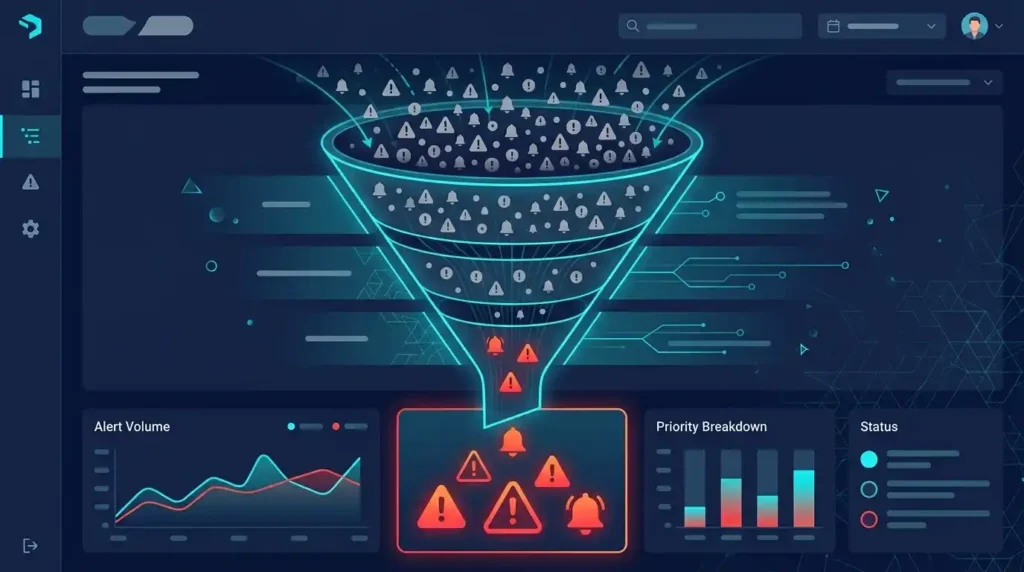
As organizations begin to implement security tools for their SaaS environment, one problem frequently emerges: too many alerts with no prioritization. If the team has to sort through hundreds of irrelevant or low-priority alerts in order to find a few genuinely critical issues, it undermines the entire point of utilizing these solutions. Instead, security teams should strive for contextual prioritization that takes both data and application sensitivity into account. After all, encountering overly permissive configuration in an application that stores publicly available information poses nothing but a minor inconvenience to the marketing team. On the other hand, the same oversight in a SaaS tool that handles financial transactions and sensitive customer information can lead to disastrous data breaches.
Frequently Asked Questions
What is SaaS Security Posture Management?
SaaS Security Posture Management (SSPM) is a practice that entails continuous analysis of the SaaS environment in search of misconfigured systems, overly permissive access controls, potentially insecure third-party integrations, and other security weaknesses.
Why is SaaS security so important?
Numerous SaaS applications contain a wealth of data about a company’s operations and customers, so they must be protected against insider threats and unauthorized access attempts. In addition, the access controls for these applications are frequently too simplistic to offer the same level of enterprise-grade security as on-premises software.
What do SaaS security tools do?
These products offer a suite of different features that allow the security team to analyze the SaaS environment for weaknesses. They can detect misconfigured systems, identify any potentially insecure integrations, collect relevant logs, enforce policies, and much more.
Is SSPM the same thing as SaaS security?
There is no universal standard for the terms “SSPM” or “SaaS security,” but they are generally not the same. SaaS security is a broad field that covers everything from protecting user accounts and enforcing data access control rules to monitoring SaaS infrastructure and configurations. In turn, SSPM is a set of measures designed to strengthen the security posture of organizations by analyzing and improving their SaaS environment.
How does SaaS Security Posture Management relate to compliance?
SSPM helps the security team ensure the organization’s adherence to relevant compliance standards by continuously analyzing the SaaS environment. It can detect misconfigurations and weaknesses that could impede the company’s ability to meet regulatory requirements.
How can organizations reduce misconfiguration risk?
Companies can utilize SSPM products to configure their desired baseline and continuously monitor their SaaS environment. It is paramount to enforce least-privilege principles and ensure that employees only utilize officially sanctioned integrations. Finally, organizations must carefully evaluate configuration changes to make sure they do not grant any unauthorized access to sensitive information.
Does SSPM replace Identity Security?
It cannot, as these are two separate domains. SSPM is a set of measures designed to strengthen SaaS security, which includes identity controls. As such, it works in tandem with Identity Security rather than replacing it.
Conclusion: SaaS Security Isn’t a Tool You Buy It’s a Discipline You Build
SaaS has enabled organizations to embrace new technologies faster, but at the same time it has created challenges for security teams that have to keep up with constant innovations. Applications are updated, employees change roles within the company, and the organization acquires new tools to aid its operations. This dynamic nature of the SaaS ecosystem prevents a static security assessment conducted every few years from providing meaningful insight into the security posture of an organization.
SaaS Security Posture Management helps the security team maintain continual oversight of the SaaS environment by constantly analyzing the current state in regards to authorized users, their permissions, third-party integrations, presence of sensitive data, and security controls. This allows organizations to identify weaknesses faster and respond to emerging threats in a timely manner. Most importantly, the security team should always remember that buying additional products is not the core of the SaaS security strategy.
Instead, it is about identifying the relevant applications, setting up the baseline, enforcing policies, and addressing the issues in an appropriate order. When used in concert with identity access management tools and other security measures such as employee training, it allows the team to construct a practical SaaS security strategy for the company.
Discover more from Diginatives
Subscribe to get the latest posts sent to your email.