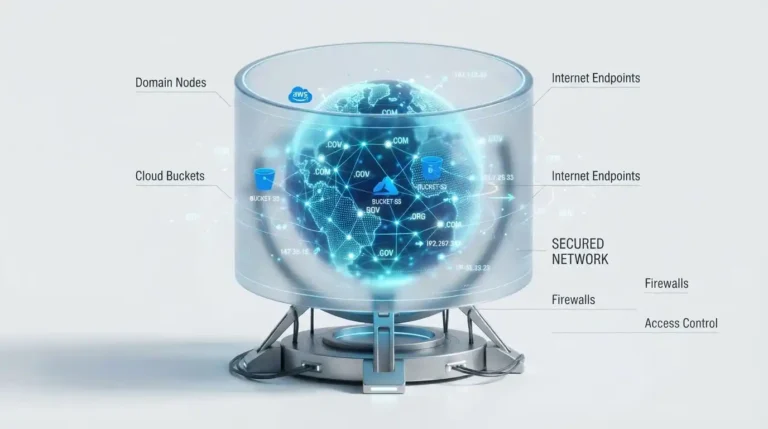
External Attack Surface Management (EASM) is a cybersecurity practice that helps organizations continuously discover and monitor their internet-facing assets. By doing so, EASM enables security teams to identify unknown systems, shadow IT, cloud assets, and third-party exposures before attackers can exploit them. Coupled with continuous monitoring and attack surface reduction, EASM helps organizations reduce their overall cyber risk and improve their security posture.
As organizations increasingly rely on the cloud, hybrid work environments, and internet-based applications, their overall digital presence extends far beyond traditional company websites and corporate networks. This growing exposure creates new opportunities for malicious actors who seek to exploit weaknesses in an organization’s security posture. While increased online exposure facilitates business innovation and flexibility, it also exposes organizations to a wider range of potential cyber threats.
Many companies have limited visibility into their overall exposure and potential attack surfaces, which makes it challenging to identify and remediate vulnerabilities before they are exploited. By focusing on attack surface reduction and continuous monitoring, EASM helps organizations improve their overall security posture.
Why Organizations Need External Attack Surface Management (EASM)
In the last decade, the digital landscape has changed dramatically. Organizations now use hybrid cloud environments, Software-as-a-Service (SaaS), remote employees, and numerous digital platforms to operate their day-to-day business. While these technologies enable organizations to be more productive and agile, they also expose organizations to an expanded attack surface.
Every application, cloud instance, domain, or other internet-facing asset that an organization uses adds to its overall attack surface. If any of these internet-facing assets are insecure or misconfigured, malicious actors can use them as a weak link to penetrate the organization’s network and systems.
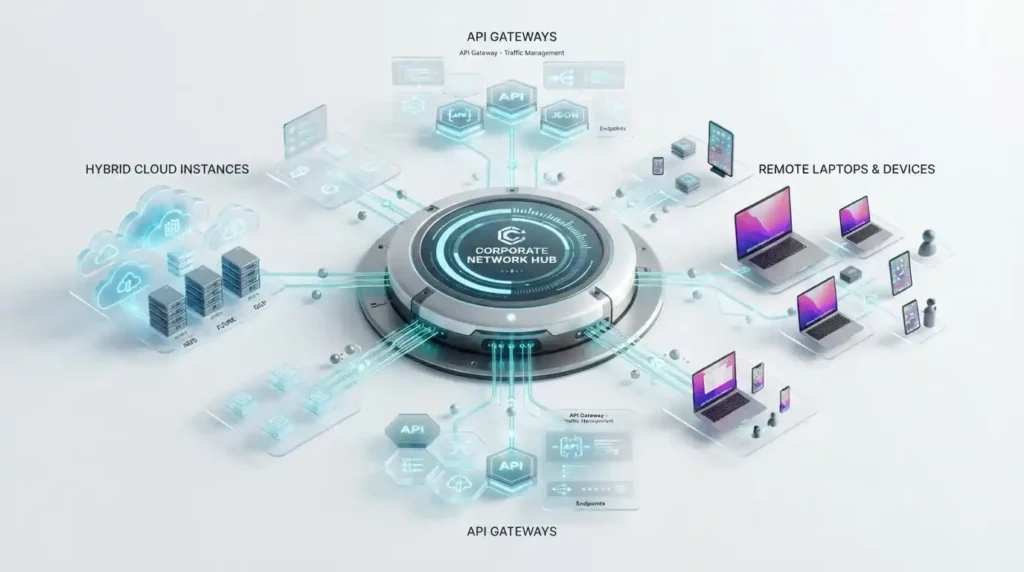
Traditional network security monitoring tools are designed to identify and respond to threats coming from within an organization’s network. They focus on protecting known systems and assets from external attacks. In contrast, EASM takes an attacker’s perspective to identify assets from an outsider’s view. EASM helps security teams discover all of their internet-facing assets, including those that the company might not even be aware of.
Internet-facing assets include:
- Public websites
- Cloud applications
- APIs
- Email servers
- VPNs
- Remote desktops
- Publicly accessible IP addresses
- SSL certificates
- Exposed storage, etc.
Many organizations have discovered new, previously unknown assets through EASM tools and practices. For instance, organizations have identified forgotten development servers or other systems that were erroneously exposed to the internet. By continuously discovering their internet-facing assets, organizations get a more accurate understanding of their exposure and attack surface.
Understanding the Biggest Cyber Attack Surface Risks Facing Organizations Today
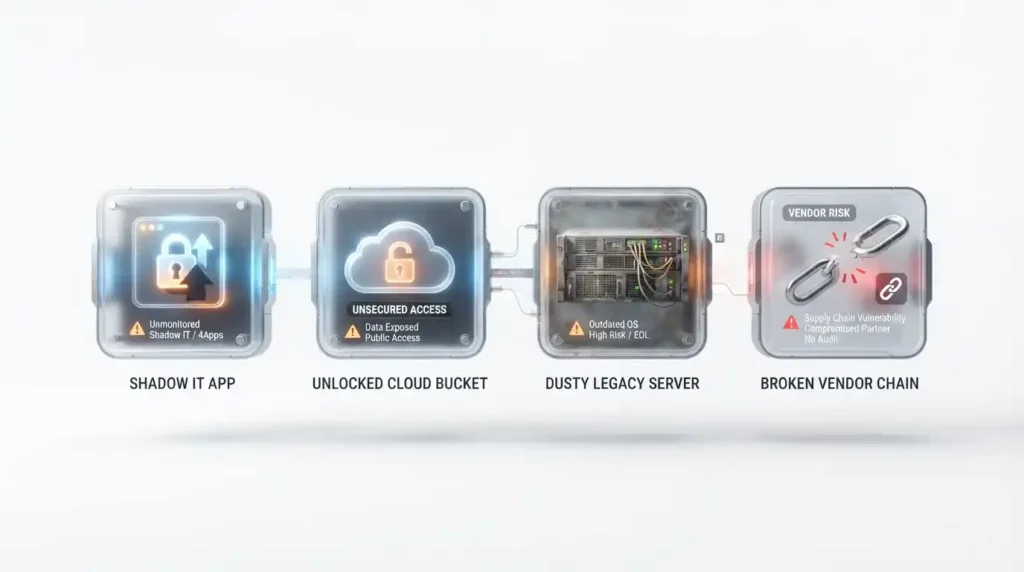
All publicly accessible online assets can potentially be used by malicious actors to gain unauthorized access to an organization’s systems and data. The more internet-facing assets an organization has, the bigger its cyber attack surface is. Attackers use these attack vectors to initiate cyberattacks and eventually gain unauthorized access to sensitive data and systems.
Some of the biggest attack surface risks that organizations face today include:
| Attack Surface Risk | Description |
|---|---|
| Shadow IT | Unapproved cloud services used by employees create unsecured entry points, exposing organizations to misconfigurations and unauthorized data sharing. |
| Misconfigured Cloud Resources | Human error in cloud configuration can lead to data breaches, DDoS attacks, and backdoor access for unauthorized parties. |
| Forgotten Internet-Facing Assets | Cloud instances and servers left active after use remain exposed to attacks. |
| Third-Party Exposures | A security incident at a vendor can expose the organization’s own systems and data to attackers. |
| Poor Asset Management | Weak asset inventory leaves vulnerabilities like expired certificates and unknown cloud instances unnoticed by security teams. |
Comparing Traditional Vulnerability Management with External Attack Surface Management
Although both approaches improve cybersecurity, they address different challenges. For a full breakdown of how the scanning side of this works including the six-step process and the tools involved – see our detailed guide on vulnerability assessments.
| Security Area | Vulnerability Management | External Attack Surface Management (EASM) |
|---|---|---|
| Primary Focus | Identifies vulnerabilities on known assets | Discovers and monitors internet-facing assets |
| Asset Discovery | Limited to existing inventories | Continuously discovers unknown assets |
| Visibility | Internal systems and managed devices | External assets visible to attackers |
| Monitoring | Periodic vulnerability scans | Continuous attack surface monitoring |
| Risk Perspective | Internal security operations | Attacker’s external view |
| Cloud Visibility | Limited unless configured | Automatically identifies exposed cloud resources |
How Continuous Threat Exposure Management Improves Attack Surface Monitoring and Cyber Risk Protection

Finding internet-exposed assets is only half the battle, and many companies fail to take further action after they locate them. To get ahead, organizations need to establish a methodology to analyze, prioritize, and remediate the risks associated with the assets they uncover. That is why many companies are adopting Continuous Threat Exposure Management (CTEM), a proactive security practice that focuses on constantly detecting, validating, prioritizing, and remediating organizational exposures. When paired with External Attack Surface Management (EASM), CTEM allows firms to move from visibility to action and reduce the attack surface.
Key Points:
- An EASM tool can reveal all internet-facing assets exposed at any given moment, including development servers, expired SSL certificates, VPN gateways, and cloud storage buckets
- Prioritization should be based on the exposure risk each vulnerability poses — its potential business impact, exploitability, asset criticality, and whether it has already been weaponized
- Rather than trying to remediate everything at once, teams should address the most pressing issues first
- Combining EASM with CTEM also improves digital risk protection by identifying unauthorized domains, accounts, or online resources impersonating the company
- This helps protect brand image, customers, and employees from phishing schemes and other threats
When implemented correctly, an EASM platform helps organizations track down every online asset controlled by an attacker. This ensures no hostile tools or domains slip through the cracks, closing off opportunities for bad actors to infiltrate systems.
Best Practices for Securing Your Attack Surface with EASM and Continuous Monitoring

To ensure high attack surface management quality, organizations need to develop systematic and repeatable processes that allow them to discover, assess, and mitigate risks before they can be abused. The following best practices will help firms improve visibility into their digital assets and reduce exposure.
Inventory All Internet-Facing Assets
Security teams must be able to track all company-owned domains, cloud platforms, APIs, apps, and remote services. The more assets are exposed to the internet, the more attack surface there is to secure and monitor. A complete inventory is crucial, as it helps the organization eliminate blind spots and ensures nothing is overlooked.
Monitor All Assets Continuously
With cloud technologies taking over modern IT infrastructure, new domain registrations, apps, and other assets are appearing every day. To ensure high attack surface management quality, firms need to adopt continuous monitoring, which allows them to identify new exposures as they occur rather than waiting for periodic scans.
Secure Cloud Assets
Many companies are rapidly migrating to the cloud, and their IT departments are not always aware of all the assets available to attackers. Thus, organizations must constantly track their cloud attack surface to ensure that nothing is misconfigured and that public access is appropriately restricted.
Detect and Remediate Shadow IT
Sometimes, employees use unauthorized cloud services and applications to increase their productivity. However, if such tools are not monitored by the organization’s security infrastructure, they pose a serious threat. With regular shadow IT discovery, companies can eliminate such weak points and reduce the attack surface.
Evaluate Third-Party Infrastructure
Many organizations allow third parties to access their networks or deal with sensitive data, so it is essential to ensure that no outside actors introduce new risks. When implemented within the EASM framework, third-party risk management helps firms identify and score their vendors’ weaknesses. It enables the company to evaluate whether an external entity follows appropriate cybersecurity practices and pinpoint the risks associated with working with this partner.
Combine EASM with Other Security Measures
The EASM platform should be used in tandem with the rest of the firm’s digital security infrastructure, including scanners, vulnerability assessments, SIEM, and response tools. Organizations pursuing formal certification should also connect these findings to a documented compliance process – our guide on SOC 2 compliance for startups breaks down what auditors expect to see. When implemented properly, EASM can be a powerful tool that significantly reduces the attack surface of organizations using it. For better results, companies should integrate it with CTEM methodology and other digital security measures. By doing that, they will be able to actively prevent attacks instead of merely reacting to them.
Frequently Asked Questions (FAQ)
What is External Attack Surface Management?
External Attack Surface Management is a cybersecurity practice that focuses on discovering internet-exposed assets, monitoring them for weaknesses, and eliminating threats before they can be used by attackers to infiltrate company systems.
How is EASM different from vulnerability management?
Vulnerability management is concerned with detecting and remediating weaknesses in software systems and applications. In contrast, EASM covers a larger scope, addressing not only known systems but also discovering new internet-facing domains and assets while monitoring their security posture. For the step-by-step mechanics of the scanning side, see what a vulnerability assessment actually involves.
Why is it essential to monitor the attack surface?
Attack surface monitoring is vital because it ensures that no assets get exposed without proper visibility. It provides organizations with constant insight into their internet-exposed assets, allowing them to reduce exposure before an attack occurs.
What is meant by shadow IT discovery?
Shadow IT refers to technologies used by employees on a regular basis that have not been approved by the security department. Thus, shadow IT discovery is the process of detecting such unauthorized applications or cloud services used by workers.
How does CTEM integrate with EASM?
CTEM helps organizations prioritize and systematically remediate the risks found with the EASM platform.
Conclusion
As enterprises grow more reliant on internet-facing digital assets, ensuring continual visibility into their exposure is a crucial cybersecurity priority. Unknown systems, misconfigured cloud resources, vulnerable third-party assets, and shadow IT can pose serious risks if left undiscovered and unprotected.
External Attack Surface Management (EASM) can provide the necessary insights into potential problem areas from an adversary’s perspective. By incorporating EASM together with Continuous Threat Exposure Management (CTEM) measures and remediation activities, enterprises can actively reduce risk and decrease the probability that attackers will successfully infiltrate their networks.
In this regard, EASM is not an alternative to, but rather a complementary layer on top of, the existing cybersecurity controls that are typically limited to the enterprise perimeter. As such, organizations should consider implementing continuous discovery of internet-facing assets, cloud security posture management, and third-party risk assessments to operate resilient and trustworthy digital services in today’s threat environment.
Our cybersecurity services team can help map your current external attack surface and build a remediation roadmap around it.
Discover more from Diginatives
Subscribe to get the latest posts sent to your email.