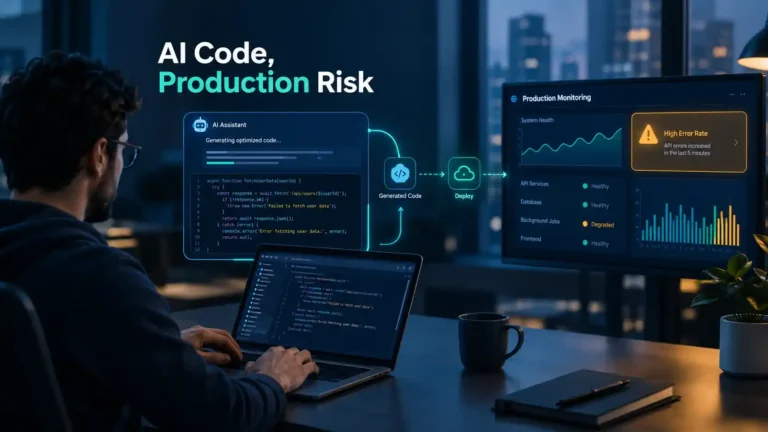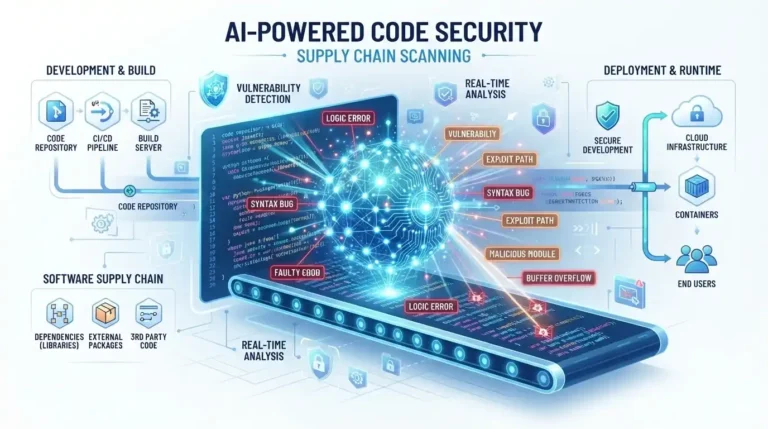
Cybersecurity has evolved beyond reactive patching models towards machine-speed defense. Modern software ecosystems have simply outgrown manual code reviews, prompting security research teams to increasingly employ autonomous vulnerability discovery as part of their strategy.
Machine learning, Large Language Models (LLMs), dynamic fuzzing and symbolic execution engines have provided security systems with tools for efficiently scanning code efficiently, formulating hypotheses about potential flaws and validating them quickly – without human interaction or time lags.
This guide examines autonomous vulnerability discovery more closely, covering its technology, safety concerns and implications on human penetration testing roles as well as strategies used to manage associated risks.
What Is Autonomous Vulnerability Discovery?
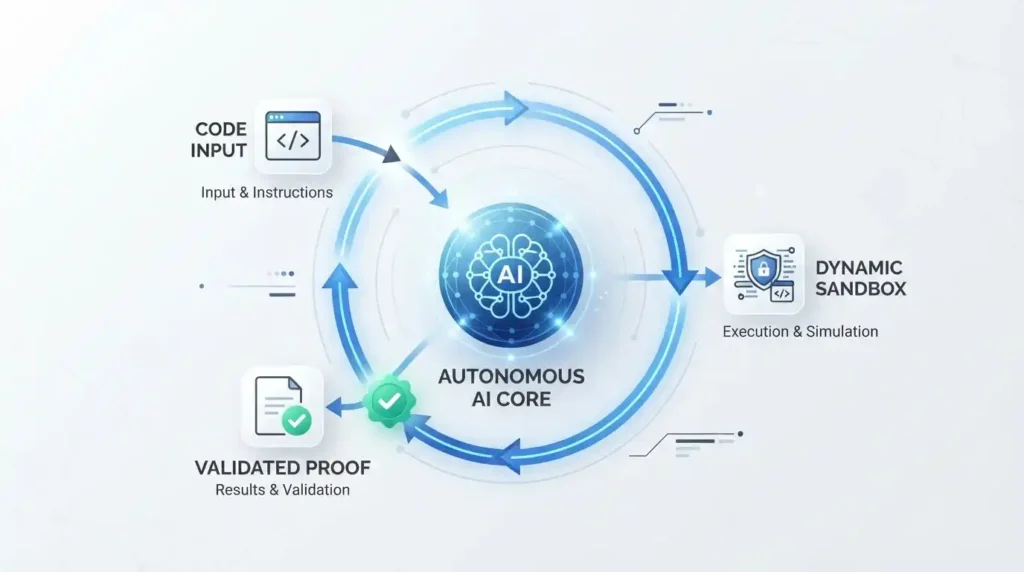
Autonomous vulnerability discovery refers to the automated, human-free process of discovering security weaknesses across software, firmware, and complex digital infrastructures.
Instead of traditional static application security testing (SAST) tools that rely on prewritten rule sets, autonomous security frameworks act more like reasoning systems by scanning source code, following logic paths and creating test inputs themselves; all while actively considering whether any potential weaknesses could actually be exploited in real life.
How Does Autonomous Vulnerability Discovery Work?
Autonomous vulnerability discovery today operates through an elaborate multi-stage orchestration pipeline which incorporates semantic reasoning with programmatic execution.
- Code Base Parsing and AST Extraction: The system transforms raw source code or binaries into Abstract Syntax Trees (ASTs) and bidirectional call graphs, providing an ideal environment for extracting abstract syntax trees (ASTs).
- Reachability Filtering: Once activated, this feature of the engine removes internal dead code and isolated functions while only considering external entry points such as API endpoints, HTTP handlers or user input interfaces – significantly reducing processing overhead costs.
- Semantic Reasoning and Hypothesis Generation: Machine learning vulnerability research engines examine code logic, data flows and variable states in order to detect issues like memory corruption, authentication bypasses or business logic flaws.
- Dynamic Fuzzing and Symbolic Execution: After developing a hypothesis, guided fuzzers begin sending modified inputs to the target system while SMT solvers use execution path constraints to locate deep conditional logic paths.
- Runtime Exploit Validation: Finally, the system attempts to create a reproducible Proof-of-Concept (PoC) exploit. If an application crashes, leaks unauthorized data, or grants elevated privileges without user authorization, its vulnerability has been confirmed as an exploitable weakness.
Can Artificial Intelligence Discover Vulnerabilities Independently?
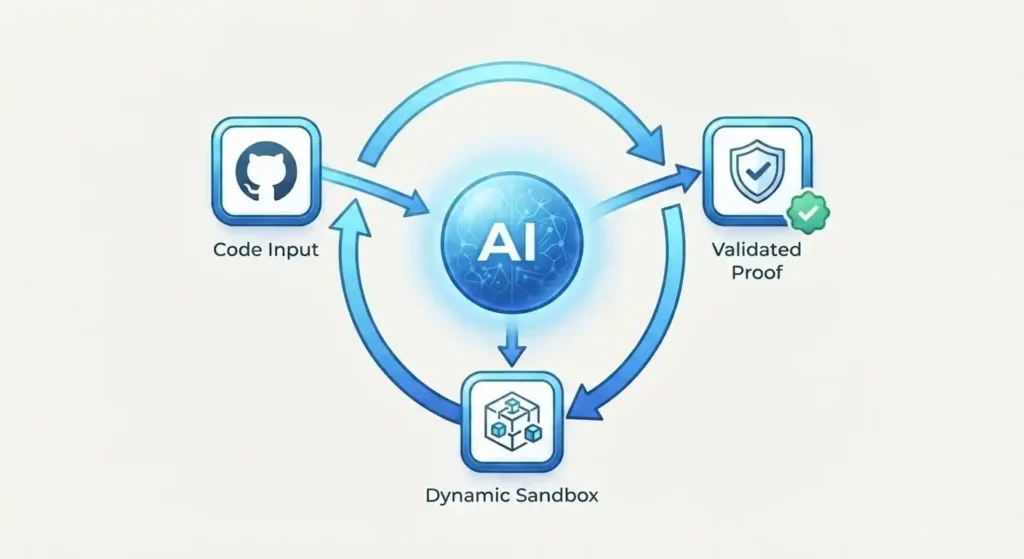
Absolutely. Modern systems demonstrate that AI can detect zero-day vulnerabilities independently when deployed within an organized testing environment.
However, AI does not operate solely via intuition or disconnected chat interfaces; to successfully discover zero-day vulnerabilities it requires pairing generative models with rigorous execution harnesses.
Where an isolated AI model might hallucinate or misinterpret code logic, a fully autonomous Cyber Reasoning System (CRS) tests its hypotheses against running code and adjusts accordingly based on feedback; should its payload fail to trigger vulnerabilities, then CRS adjusts accordingly preserving context across iterative tests.
With autonomous bug hunting / AI bug hunting, organizations can benefit from both speedy automation tools and contextual accuracy traditionally provided by human security engineers.
Comparison: Traditional Bug Hunting vs. Autonomous AI Bug Hunting
| Security Feature | Traditional Manual Pen Testing | Legacy Automated Scanners (SAST/DAST) | Autonomous AI Bug Hunting |
|---|---|---|---|
| Execution Speed | Low (Weeks to Months) | High (Hours) | Very High (Minutes to Hours) |
| Depth of Context | High (Deep human logic) | Low (Syntax/Pattern matching) | High (Semantic code understanding) |
| False Positive Rate | Minimal | High | Low (Requires PoC verification) |
| Scalability | Non-scalable (Human-bound) | Highly Scalable | Highly Scalable |
| Zero-Day Discovery | High capability | Poor / Non-existent | High capability |
Through autonomous bug hunting / AI bug hunting, organizations can achieve the speed of automated tools alongside the contextual accuracy traditionally reserved for human security engineers.
Is AI-Driven Vulnerability Discovery Safe?
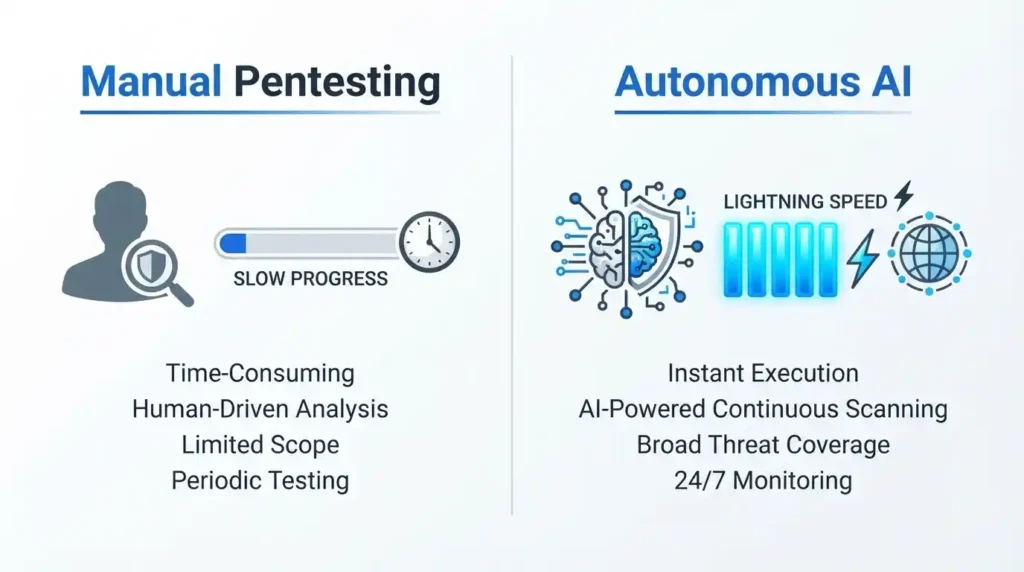
Commonly asked by security leaders is, “Is AI-driven vulnerability discovery safe?“
The answer depends on context, target authorization and execution guardrails for autonomous vulnerability discovery systems. Mismanaging AI vulnerability discovery poses operational and strategic risks if unchecked:
- Dual-Use Dilemma: When AI engines detect unpatched flaws for software developers, their results can easily be exploited by malicious threat actors to produce functional exploits automatically.
- Resource Overload: Autonomous agents that run continuous tests in live production environments may cause unexpected DoS attacks or database corruption, leading to unexpected denial-of-service (DoS) attacks or database corruption.
- Scope Drift: Without established network boundaries, autonomous agentic systems could scan unapproved third-party APIs or external cloud services that fall outside their purview.
- Unverified Automated Patching: Utilizing AI for automating patch application without human code review risks disrupting functional business logic or creating secondary vulnerabilities.
Risks Associated With AI Discovering Zero-Day Vulnerabilities Before Patches Exist
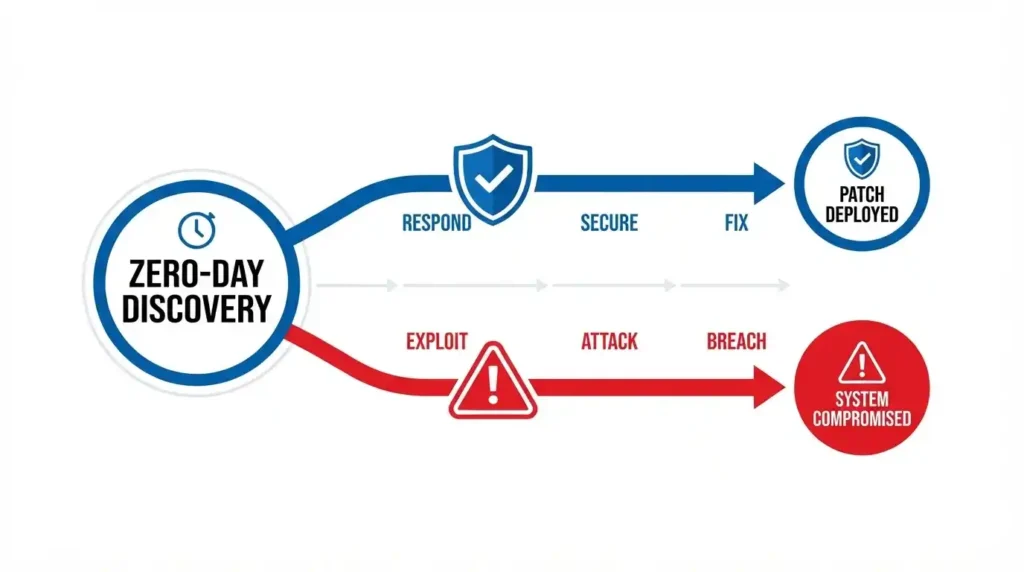
AI has quickly become a crucial tool in discovering zero-day vulnerabilities, creating a race against time to find them before patches exist. There are multiple risks associated with using AI for zero-day discovery:
Instant Weaponization at Scale: Traditional zero-day development typically required weeks of specialist reverse engineering; with adversarial AI, however, discovery-to-exploit timelines can be reduced from days or even hours down to minutes, leaving incident response teams no time for reaction or reaction windows.
Attackers possess an asymmetric offensive advantage: attackers only need to find one exploitable path, while defenders must protect all assets. If malicious actors deploy faster machine learning vulnerability research platforms than software vendors, critical infrastructure becomes particularly exposed.
N-Day Exposure Acceleration: Reverse engineering patches released to unpatched systems using automated semantic diffing tools becomes almost trivially fast when reverse engineered to target them as quickly as possible using automatic semantic diffing tools.
Will AI Replace Penetration Testers?
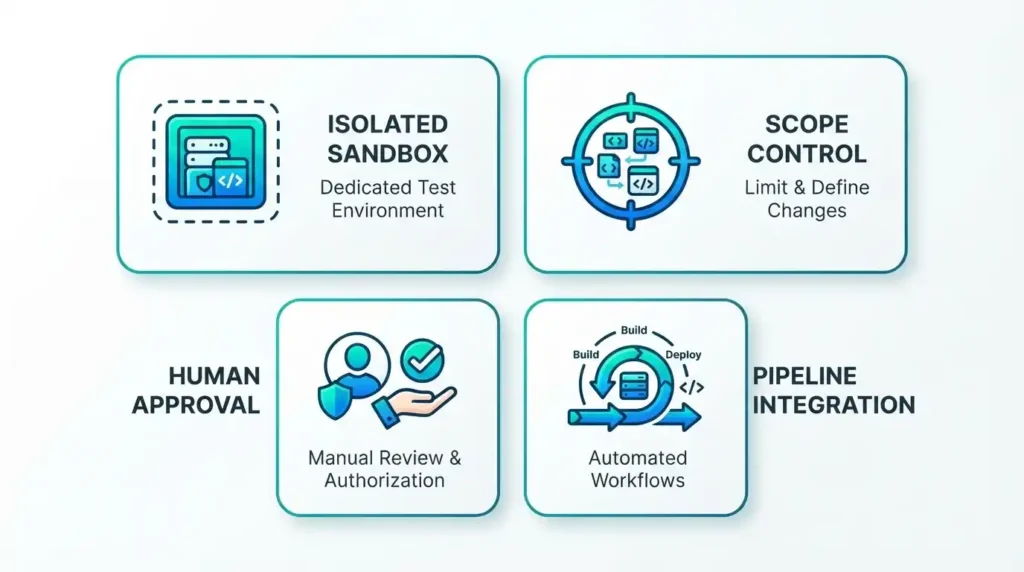
One key question when planning cybersecurity careers is: Will artificial intelligence replace penetration testers?
Human Pentester (Strategic Reasoning & Complex Logic)
                         +
Autonomous AI Bug Hunting (High-Speed Execution & Scale)
                         =
Augmented Cyber Security Teams
AI will not replace penetration testers; rather, it will redefine their role. Instead of manually checking routine authentication flows or configuring standard static code analysis passes, human penetration testers will move toward strategic oversight.
As AI Proves Itself
From Script Executors to System Architects:
Human security teams will become adept at overseeing execution boundaries, designing test harnesses and reviewing complex AI-generated zero-day proof-of-concepts.
Handling Complex Logic Flaws:
While automated vulnerability discovery excels at finding structural, memory, and semantic code flaws, humans still remain essential in contextual logic validation – for instance when assessing whether violating multi-tier business process violations carries real world risk.
Ethical and Regulatory Compliance:
Compliance frameworks and legal regulations demand explicit human signoff and liability management processes, to ensure human security personnel remain central to operations.
Practical Deployment Tips for Security Teams
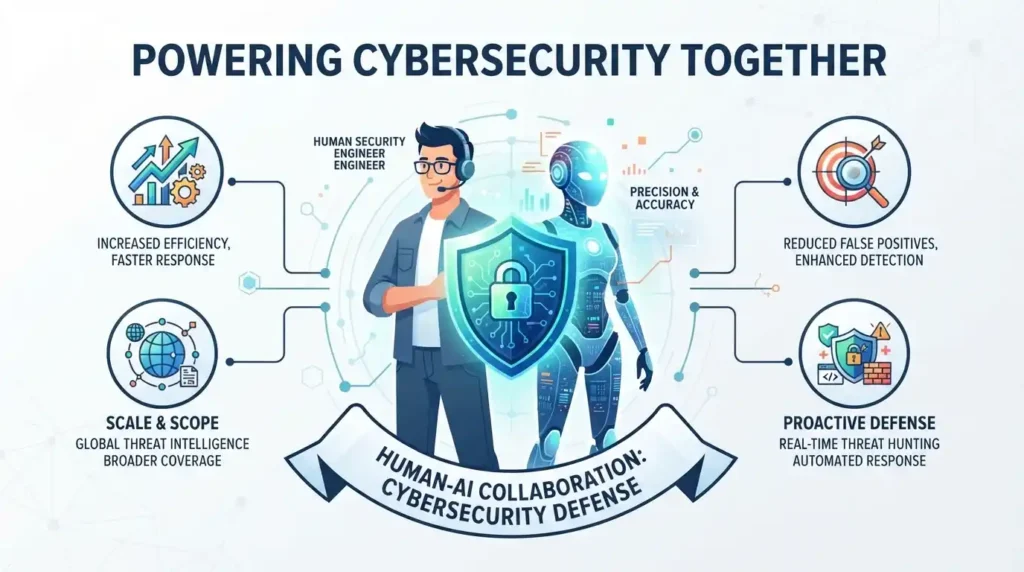
Integrating autonomous vulnerability discovery into an enterprise application security pipeline requires striking a delicate balance between automated speed and operational safety. Because autonomous engines act as active reasoning agents that often generate real payloads to demonstrate exploitability, unrestrained deployment could cause service outages, corrupt databases or breach compliance boundaries – potentially leading to service outages, corruption of databases or noncompliance violations.
Security teams looking to safely utilize autonomous bug hunting should implement these actionable steps:
1. Isolate Discovery Environments in Staging Sandboxes
Be wary when using vulnerability engines directly against live production infrastructure. Autonomous agents rely on dynamic execution, stress testing boundaries with payload injection that could result in unexpected Denial of Service (DoS) conditions.
- Action Plan: Create dedicated containerized staging sandboxes (using Kubernetes pods or isolated cloud environments ), seeded solely with anonymized synthetic data.
- Safety Benefit: This feature of AI allows the AI engine to explore and test zero-day hypotheses without risking real customer data, live system outage or database corruption.
2. Implement Strict Scope Enclosures and Deterministic Guardrails
Agentic AI systems can become vulnerable to scope drift if left free to explore network interfaces without clearly defined boundaries. If an app integrates with third-party vendor APIs, payment gateways, or external microservices without oversight, an uncontrolled autonomous agent might attempt to explore them, potentially incurring serious legal or compliance liabilities as a result.
- Action Plan: Hardcode deterministic network constraints directly into the agent’s execution harness. Implement strict IP whitelisting, API path filtering and access-control wrappers as appropriate.
- Safety Benefit: Limits the system to operate only within its authorized boundaries, thereby eliminating any risk of external scanning.
3. Enforce Human-in-the-Loop (HITL) Triaging and Approval Windows
While AI for discovering zero-day vulnerabilities operates rapidly, automated patch generation or public vulnerability disclosure should never be left fully up to autonomous models alone; otherwise they risk missing critical business logic nuances, proposing patches which break functional upstream dependencies, etc.
- Action Plan: Implement a mandatory Human-in-the-Loop (HITL) triage step. Designate senior security engineers to review PoC reports generated by AI before any code pull requests or hotfixes are merged into production.
- Safety Benefit: Integrates the rapid discovery capabilities of machine learning with the expertise and business-logic of human security experts for maximum impactful discovery capabilities.
4. Integrate Incrementally into Continuous Integration/Continuous Delivery Pipelines
Executing full-scale autonomous vulnerability Discovery scans of an entire legacy monolith with every developer commit can create severe bottlenecks in pipelines and frustration among developers. By infiltrating vulnerability scans incrementally into Continuous Integration/Continuous Delivery (CI/CD) pipelines, vulnerability scanning becomes much simpler to implement incrementally with minimal development impact and friction from developers.
Action Plan: Integrate lightweight autonomous discovery modules gradually. Modify your system to perform targeted reachability analyses only on incremental code changes (pull requests) during early CI/CD stages; save deep symbolic execution runs for scheduled off-peak batch builds.
Safety Benefit: Enhancing development velocity while simultaneously identifying high-severity vulnerabilities before they reach production branches.
Key Takeaways of Autonomous Vulnerability Discovery
- Shifting From Reactive to Proactive Security: Automated vulnerability discovery helps move security from reactive, manual code review, to continuous machine verification at machine speeds.
- Hybrid Systems Win: For maximum success in autonomous bug hunting/AI bug hunting platforms, LLM semantic reasoning must be combined with dynamic verification techniques such as fuzzing and symbolic execution.
- Safety Needs Guardrails: Addressing AI-driven vulnerability detection safely requires tight scope controls, isolated testing staging grounds, and audit journals.
- Pentesters Are Evolve, Not Disappear: While AI won’t replace penetration testers entirely, security professionals who leverage AI will outstrip those who do not.
Frequently Asked Questions (FAQs)
What is the main difference between SAST and autonomous vulnerability discovery?
Traditional SAST tools compare source code against static pattern rules, often leading to high false positive rates. Meanwhile, autonomous vulnerability discovery uses semantic machine learning and dynamic execution tools to verify whether vulnerabilities can really be exploited in practice.
How do machines discover zero-day vulnerabilities without signatures?
Essentially, machine learning vulnerability research utilizes engines that perform semantic context and logic execution flow analysis on code rather than relying solely on known signature databases. They generate novel execution paths and test inputs in order to find unexpected system behaviors.
How can organizations mitigate risks related to AI finding zero-day vulnerabilities before patches exist?
Organizations should adopt defense-in-depth security architectures, utilize automated asset inventories, implement continuous dynamic patching and use real-time behavioral monitoring to detect zero-day exploit attempts.
Can small security teams manage autonomous vulnerability discovery tools?
Absolutely. Open-source frameworks and AI-augmented security platforms make it possible for lean application security teams to implement automated vulnerability discovery pipelines without needing large, dedicated research teams.
Discover more from Diginatives
Subscribe to get the latest posts sent to your email.