Suppose you get a bill from your cloud provider, which is a hundred times larger than your previous month’s bill. Your team has not launched any new service. No large-scale testing was carried out. Some other person used your AI account all day long, making huge bills.
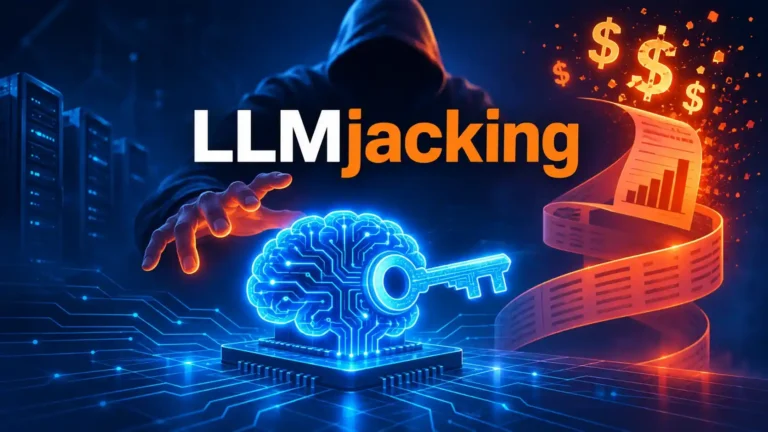
That is how LLMjacking happens. It is not about theory. Only recently, at the beginning of November 2026, Google’s Threat Intelligence Group and Mandiant released data on LLMjacking, and the numbers are astonishing: there was at least one day when the charge amounted to over $100,000; in some cases, companies had losses of more than $1 million before getting access blocked.
If your company has AI (be it a chatbot, an automation tool, a code-writing AI, or a corporate gateway), you can rest assured that at least one secret is likely to be stolen by somebody. In this guide, we’ll tell you what is LLMjacking, how hackers are able to access your account, how to spot them before it’s too late and what to do during the first hour after an attack.
What Is Involved in LLMjacking?
LLMjacking is when an organization becomes unable to leverage large language models. Hackers are granted an access to the API key, session token or cloud credentials and use a paid AI service for their benefit. It costs every user to make requests to this resource.
According to Google, LLMjacking is considered to be a new type of cryptojacking attack, which has been in the market for a long time already. Back then, it meant that the criminals have been mining cryptocurrencies on a person’s server secretly, whereas LLMjacking takes money faster than ever.
Also, there are some differences between LLMjacking and prompt injection. Prompt injection manipulates the AI’s work and forces it to perform a wrong request. In its turn, LLMjacking doesn’t change anything but LLMjacking does not affect its behavior at all. The attacker uses a valid key and pays for services.
Why Would Attackers Need Access to Your AI?
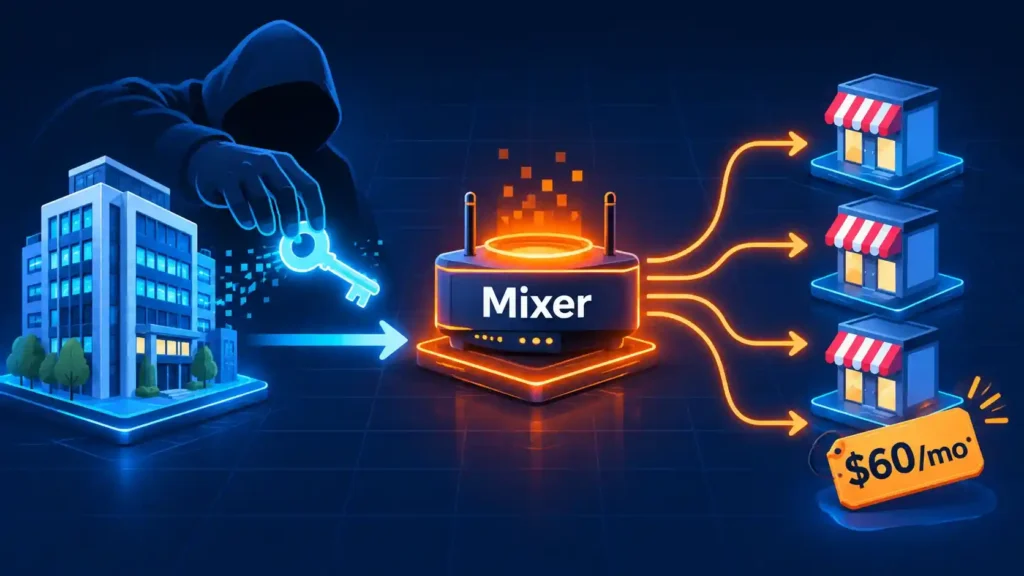
As you are aware of how costly it is to run a new AI model on a huge scale, then think what a person who would be able to use it freely would be like, since the cost will be paid by the victim.
According to the researchers from Google, the model has changed. This time, there is a new generation of attackers, which is named “LLM Mixers“. They serve the role of routers. For some reason, they succeed in stealing access and then selling the obtained information to buyers through the dark web network. In particular, one of the services was providing an “unlimited” subscription to a new AI model at the price of $60 per month.
For Google researchers, LLMjacking is preferable to cryptojacking as now the profit margins of LLMjacking have become even higher and attacks are made in a more rapid manner.
First of all, it does not matter that much whether your company is big or small as you just have the active access key in order for the attacks to happen. But what is really important about LLMjacking is that it is mostly a business move
THE BEGINNING POINT FOR LLMJACKING ATTACKS
One thing that most guides ignore when discussing attacks. People attacking Google weren’t doing anything unconventional with respect to AI. Instead, they were merely stealing credentials, with the ultimate target being the AI key.
Most of the victims had some leaked or stolen cloud credentials (i.e. IAM credentials, service account keys, GitHub access tokens, and live session tokens).
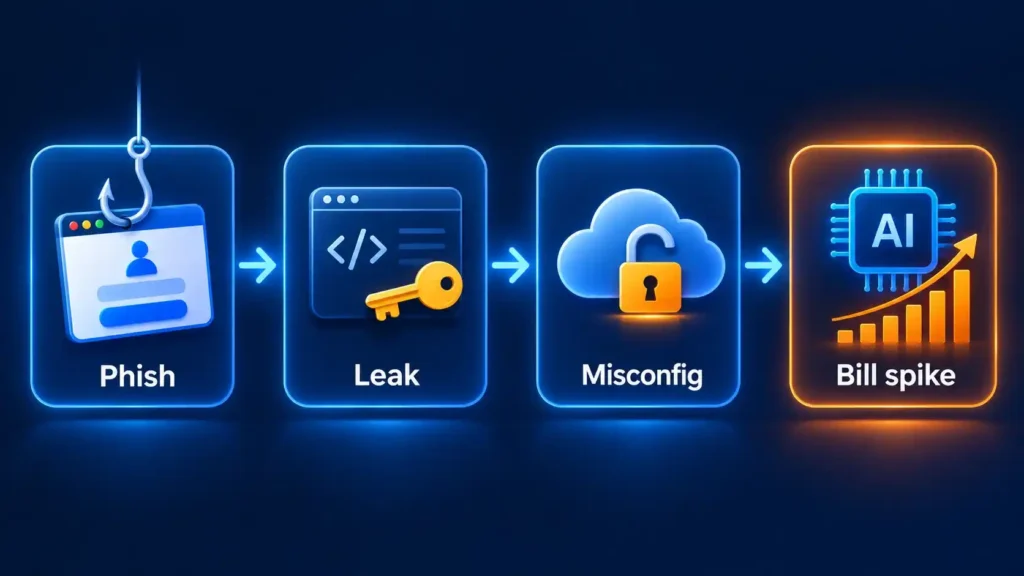
There are also some other ways that Google has learned of:
- Phishing and fake websites. An actor known as UNC6993 created a website pretending to be a platform for joining an LLM community. Because of this, it was able to fool people into giving it a raw token payload, allowing it to avoid performing any password checks or two-factor authentications.
- Source code theft. Token source codes were stolen from public repositories on GitHub.
- Improperly set up environment. In one incident, just one improperly configured service account key was able to gain access to a cloud instance and use an LLM API.
- Leaked client-side code. Any element of front-end code could have key information made available to attackers.
- Weakness of AI middleware systems. Attackers went after LLM routing software.
Once inside the establishment, they did not use AI software to access their account. As per the report, the hackers were busy mapping the cloud infrastructure on the network, duplicating source code to find out possible secret codes in hardcoded patterns, opening up many different service accounts, using SSH keys for access, and even naming their account after some well-known billing optimization tool so it wouldn’t attract attention. Some of them were applying a strategy named “burn and rotate” whereby they made accounts for a limited time and closed them down, thus evading limitations on demands.
This is important since it changes the context of the whole incident. An unexpected bill from an AI provider is rarely the whole case.
The AI gateway problem
There are many companies who make use of a gateway between their applications and the providers of their technological services. This is understandable. It provides centralized administration for the keys, budgeting and logging.
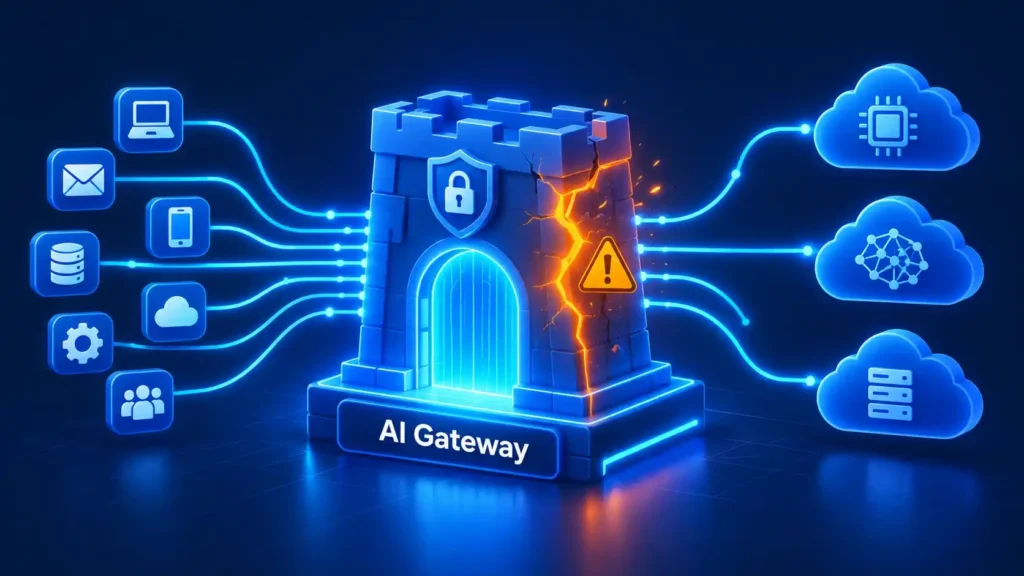
This also provides a technology solution that wins. With the gateway being hacked, all the credentials of the suppliers will be at risk.
Recent numbers are alarming:
- In October 2026, hackers made use of compromised GitHub credentials to upload a hacked version of LiteLLM that is an open-source tool. According to the project report, malware was running for almost 2 hours. The objective of the malware was to gather the cloud credentials and API keys. This is the second time LiteLLM has experienced a breach of GitHub this year.
- On November 18 of the same year, LiteLLM’s vulnerability was listed in the vulnerability database of CISA.
- Wiz when scanning LiteLLM’s servers discovered that 10% of servers responded positively to the sample administrator key as per the instructions provided.
This doesn’t mean don’t use gateways. This means that a gateway is infrastructure, too, and needs to be treated as such — patched, version pinned when you roll out a new one, kept off of the internet if possible, and never left with an example credential.
Signals to look for in LLMjacking attack
The following alert may not come up “LLMjacking”.
Indicators might be:
- A spike in your AI or GPU spend without the introduction of a new model, campaign or project.
- Models used at strange hours and odd locations when there is no one on your payroll present.
- Model invocation through APIs used by no one from your team. They tend to make use of those models whose price is the highest.
- Creation of new API keys, services accounts, or IAM users that are not yours. In particular those users having a convincing name such as ‘cost-optimizer’.
- Disabling logging of model invocation or alert features.
- Credentials posted on public repository, paste site, or chatroom.
- Unusual behavior from chatbot and/or Customer Portal that writes weird code among other things.
The difficulty arises from the fact that anything done could easily be justified, such that what might look like LLMjacking could, perhaps, just be the result of a difficult week having been spent. That’s where the baseline comes into play. Without the information on how much usage should happen on each key, it is impossible to detect any unusual activity that might be going on.
Things to do in the First Hour
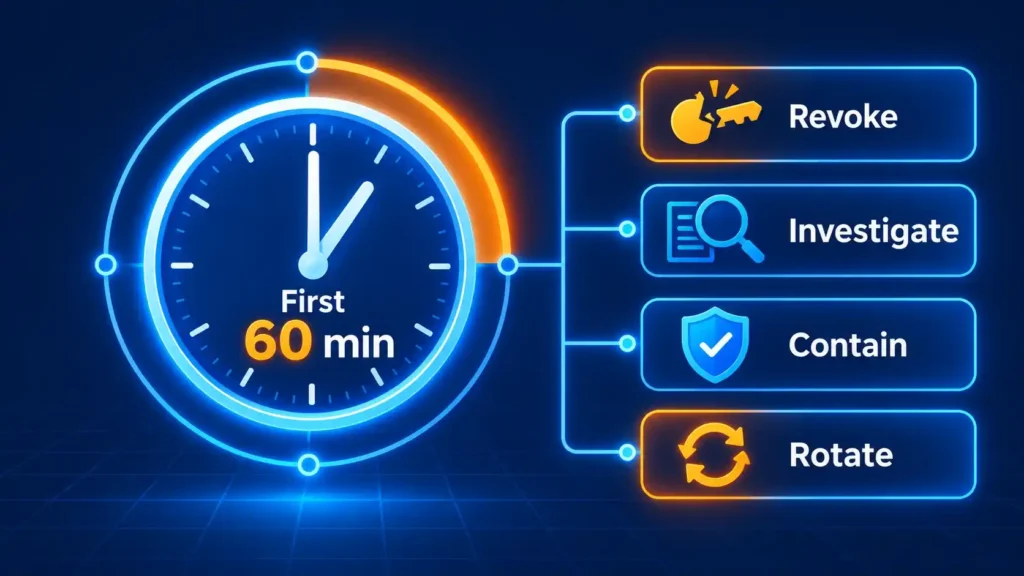
If you suspect that something is really wrong, go for the quick response over the perfect one. The fees are constantly rising. An organized way to respond would be:
- Cancel the suspect token/key. There is no need to wait for confirmation- a replacement should be issued within five minutes. Revocation of the session must be done.
- Check what other resources could be accessed by this identity. If the credentials allowed access to various cloud infrastructure, it is likely that the attacker has already accessed the system. Treat this case as an attack against your infrastructure.
- Investigate for the possible ways of accessing the system persistently. Look through any recent service accounts, IAM users, API keys and SSH keys created. Erase everything unknown, but ensure that you keep a copy.
- Collect data logs. Compare the logs from your cloud system with the logs from your gateway service. Figure out when the suspicious behavior started, and find out what IPs and what models were involved.
- Containment strategy. Define quota limitations and set budget restrictions. Containment is not a solution, but it will prevent access to the attacker with an active session.
- Swap neighbors. Anything that is located close to the compromised credentials (such as database password, third party tokens, and other secrets that were stored in the same manager) should be considered compromised.
- Contact your provider. Begin a billing dispute and report a security incident as soon as possible. Providers already know about this problem and will need a chronology of events.
- What was the initial vector of attack? It is like opening the door and not fixing it.
How LLMjacking is prevented
There isn’t anything special about this principle. This principle is also applied when preventing credential theft with some modifications.
- Treat AI keys like credit cards. Keep them secured in a secret manager instead of using code or configuration files, chat messages or UI packages. Check your repositories for leaked keys including those that have been leaked in previous versions of the code.
- Create independent keys for each application. Using one key for all applications results in a security breach of the entire system in case of a key leak. The use of unique keys for each application allows revoking this one key without affecting the others on the system.
- Follow the principle of least privilege. The key that can only access the specific model used by your application will be of much lower value to the hacker than if it gives access to all data.
- Look for ephemeral credentials. Temporary tokens shut off all by themselves. Static keys that are in place for long periods of time are what cyber bad guys want to get their hands on.
- Be sure to create budget limits, quotas and alerts about which billing systems are going to be used. Even if they will not be able to block access for a hacker, they will help turn $100,000 of damage into a small incident and alert about the problems before they happen.
- Make sure that logging model calls is activated and being followed. Logs you are not reading don’t help at all. Set alerts if a new model is called, for a new geographic region or if suddenly the amount of calls for a specific key changes dramatically.
- Make sure that you secure all the endpoints which can be accessed via the internet. No self-hosted model servers or gateways should be left without the internet. The best solution for the endpoints is to limit access by using authentication.
- Make use of MFA that is more secure and, preferably, in addition to that. UNC6993 scheme worked because the hacker managed to take over the token for a live session
- Learn cloud basics. Most LLMjacking attacks start from common cloud vulnerabilities, so everything covered in our cloud security checklist applies to the scenario.
In case of running AI automation, audit your workflows:
This is where small and medium companies usually stumble upon it via a side entrance. Workflow software, no-code automation or script is holding the key for AI, and nobody knows about it.
Perform a quick audit:
- Create a list of all places where the AI key can be found: workflow software, cron jobs, Jupyter notebooks, shared drives, browser extensions.
- Determine the owner of each of them and remove those that don’t have owners.
- Verify that each automation uses its own key with spending limits.
- Verify that workflow software is updated and can’t be accessed by anyone else but you.
The SOC 2 checklist for secure AI pipeline automation goes through the controls to apply for such processes.
Who should pay attention to this?
Based on Google’s experience with victims, industries include finance services, retail, technology, and transportation. Geographic coverage includes North America, South America, and Asia-Pacific – that’s diverse, rather than focused on one area.
For those who don’t have a dedicated security staff monitoring spending, logging, and identifying all the time, managed security services can be an option. The capabilities and limitations of today’s monitoring are covered in our paper on agentic SOC for SMB.
LLMjacking FAQ
What is LLMjacking in plain English?
It’s when attackers steal your access to an AI and use it to get their AI for free. You pay for it.
How does it differ from prompt injection?
Prompt injection controls the behavior of the model. LLMjacking steals your access to it. You can have one without the other.
How much will it cost me?
At Google, we’ve seen more than $100,000 within 24 hours at an individual user level and charges of $1 million or more at the organizational level before access is blocked. The cost will vary depending on your account restrictions, which you should review.
How can I find out whether my API key was compromised?
Unusual spending, spending during unusual hours or from unusual locations, usage of models that you never use, and unknown keys or service accounts are all signs that your key may have been stolen. Check gateway logs against cloud audit logs.
What should I do immediately if I think it is?
Revoke the key and any related sessions and then evaluate other resources that may be reachable via that identity and determine if the attacker left any traces of compromise.
Are budget constraints a deterrent to LLMjacking attacks?
They mitigate the impact but are not a protection. Access control is the protection.
Is a smaller firm an actual target?
Yes. The attackers need functioning keys, and they do not have to know who you are to use them.
The quick and dirty version
LLMjacking is a billing issue that actually begins as a credentials issue. The threat actor isn’t hacking the AI; they’re stealing your identity and billing to your account.
Thus, the solution should be straightforward. First, identify where your keys are located. Next, assign specific duties for each key. Monitor their use. And finally, if there is suspicious activity, then revoke and investigate.
In case you want some extra eyes checking your AI keys, gateways, and automations, then Diginatives’ security team is here to help.
Discover more from Diginatives
Subscribe to get the latest posts sent to your email.