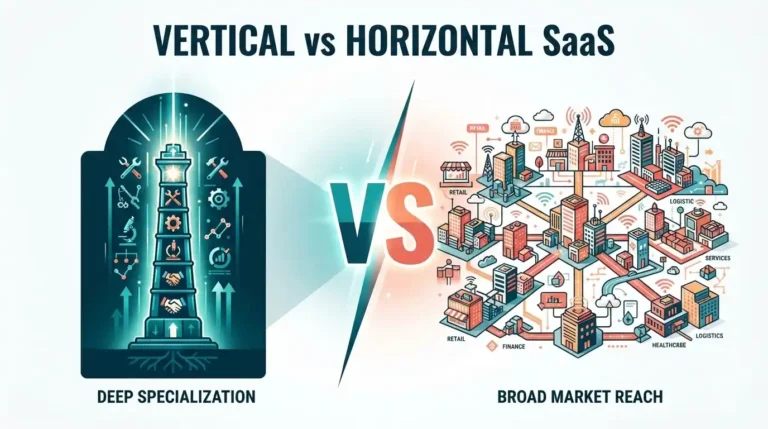
Vertical SaaS vs horizontal SaaS represent two approaches to building software. The former focuses on depth, while the latter strives for breadth. Both methods can successfully power the SaaS business model but require different strategies and approaches.
The debate between vertical vs horizontal SaaS is particularly relevant in 2026, as technologies such as AI, automation, and industry-specific features transform the market landscape.
What Is the Difference Between Vertical SaaS and Horizontal SaaS?
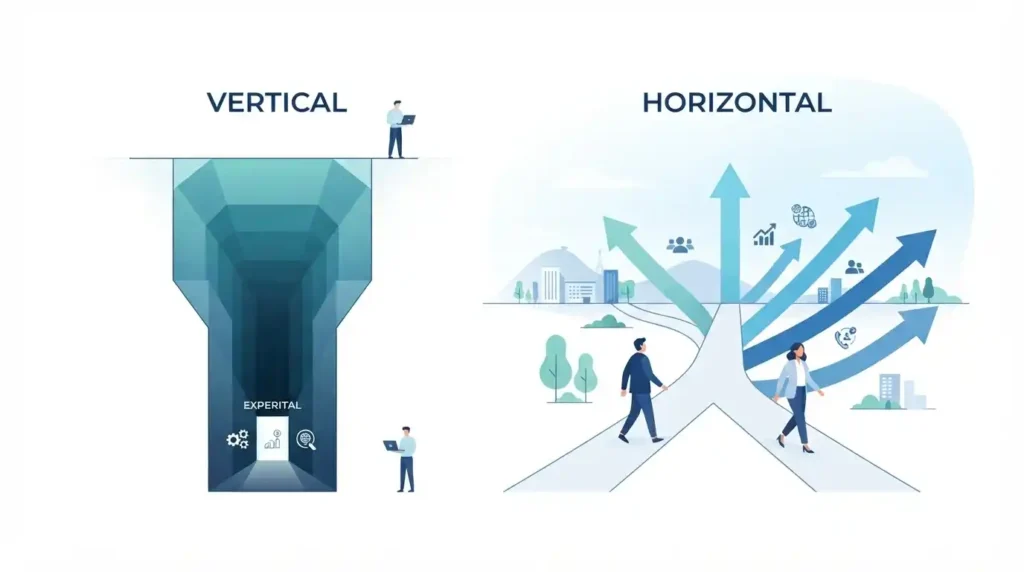
The core difference between vertical SaaS vs horizontal SaaS lies in the target market. The former focuses on a specific industry, and the latter targets multiple businesses that share a common challenge.
A restaurant-specific platform helps manage catering-specific tasks, such as tables, menus, kitchen operations, POS software, and associated reporting. At the same time, a horizontal project management tool can serve a restaurant, construction company, university, marketing agency, or software company.
What Makes a SaaS Product “Vertical”?
A vertical product addresses industry-specific challenges and serves only one sector. Vertical SaaS products are also known as niche or focused software.
Industries covered by vertical SaaS products include:
- Healthcare
- Construction
- Restaurants
- Real estate
- Law
- Insurance
- Manufacturing
- Education
- Financial services
Vertical products are developed for a specific audience with similar use cases, features, regulations, and requirements which is exactly why compliance frameworks like SOC 2, ISO 27001, and HIPAA tend to matter so much more in vertical products than in horizontal ones.
What Makes a SaaS Product “Horizontal”?
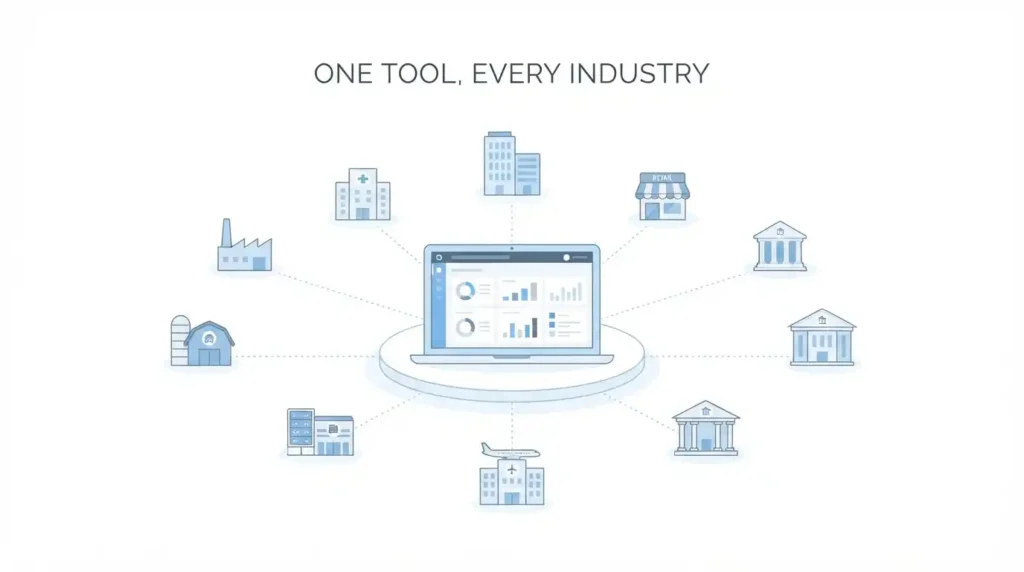
Horizontal SaaS products solve business problems across industries. They focus on a particular function rather than the target market.
Common functions covered by horizontal SaaS products include:
- Customer relationship management
- Communication
- Project management
- Accounting
- Marketing automation
- File sharing
- Video conferencing
The same product can be used by clients from different industries, as it focuses on their common needs and goals. Because horizontal products sit inside so many different companies’ stacks at once, zero trust security and strong access controls become non-negotiable as the customer base scales.
What Are the Key Differences in 2026?
The main difference between vertical and horizontal SaaS products is in their target markets. A focused solution serves one industry, while an extended one covers multiple sectors.
A vertical product has a smaller target market but offers a more comprehensive feature set. At the same time, a horizontal product has a larger audience but cannot be as comprehensive, as it has to serve multiple industries with their specific needs.
The table below compares the two approaches based on several key factors.
| Factor | Vertical SaaS | Horizontal SaaS |
|---|---|---|
| Target market | One industry | Multiple industries |
| Product design | Deeply specialized | Broad and flexible |
| Customer needs | Industry specific | Common business need |
| Market size | Narrower | Larger |
| Competition | Often niche-focused | Usually intense |
| Marketing | Industry specific | Broad market |
| Customer relationship | Often highly specialized | More generalized |
| Main challenge | Limited market size | Strong competition |
What Are Some Examples of Vertical SaaS in 2026?
Vertical SaaS products typically serve industries with specific operations that cannot be handled by general-purpose solutions. For example, restaurant management or home service scheduling software has limited applicability outside its industry.
Construction management and healthcare software also have inherent limitations in terms of their target markets. Other examples of vertical SaaS products include:
- Toast – restaurant technology
- Procore – construction management
- Veeva Systems – life sciences
- Service Titan – home and commercial services
- nCino – banking software
Such companies acknowledge the limitations of their target markets but also recognize the value of addressing the industry’s needs in depth often by building custom AI models trained on their specific industry’s data rather than relying on generic tools.
What Are Some Examples of Horizontal SaaS in 2026?
Horizontal SaaS examples include generic enterprise software products designed to solve common business problems across multiple industries. For example, a customer relationship management platform can be used in various sectors, including technology, real estate, and financial services.
Other examples of horizontal SaaS products are:
- Salesforce – customer relationship management
- Slack – office communication
- Zoom – video conferencing
- HubSpot – marketing and sales
- Notion – documentation
- Asana – project management
Horizontal products address general business needs but still have to differentiate themselves from competitors.
What Is the Business Model of a Vertical SaaS Company?
The business model of a vertical SaaS company typically relies on extended selling capabilities. Apart from the standard subscription options, such companies can offer additional services and products.
A vertical SaaS company typically adopts a similar revenue model to any other subscription-based business. It sells software to its target market on a recurring basis, typically annual or monthly.
However, the depth of the offering, as well as relationships with clients, is what enables a vertical SaaS company to generate additional revenues. For example, a restaurant software solution can offer payment processing, payroll services, hardware, online ordering, and inventory management. Thus, the company provides its clients with an end-to-end solution.
Why Does Industry Specialization Help in SaaS?
Industry-specific knowledge generates additional advantages and helps a SaaS company differentiate itself. For example, a generic restaurant platform has little to no experience in managing catering operations. At the same time, a vertical player knows the industry’s intricacies and can develop an end-to-end solution.
A company with deep industry knowledge can also introduce features and functions that generic competitors cannot, at least not right away particularly when they bring in dedicated Generative AI developers who understand both the technology and the industry’s workflows. Such SaaS products can also establish relationships with relevant partners.
Vertical SaaS products can leverage their industry knowledge to become much more competitive over time, compared to horizontal alternatives.
What Is the Business Model of a Horizontal SaaS Company?
The horizontal SaaS business model revolves around building a product that serves multiple industries. Thus, such a company has a much broader target market.
A horizontal SaaS company can use any of the standard subscription models. The choice of a particular method depends on the product, industry, and stage of growth.
Horizontal SaaS products typically utilize either an annual or a monthly billing option. More advanced companies offer enterprise sales, which is the preferred choice for large businesses. Pricing options also vary, as companies try to differentiate themselves through the feature sets and additional services.
Horizontal SaaS products typically enjoy a much broader addressable market. For example, almost any growing business will be interested in project management, customer relationship management, team communication, and documentation tools.
How Big Is the Vertical SaaS Market in 2026?

The vertical SaaS market covers a wide range of industries, software products, and additional services. Report details may differ, as analysts use different classifications when estimating the market size.
According to a Business Research Insights publication, the global vertical SaaS market size is expected to hit $143.45 billion by 2026, with a CAGR of 16.3% between 2026 and 2035.
Many 2026 industry reports utilize the same statistical information, which means their findings are similar. On the other hand, some analysts have diverging views regarding the definition of the vertical SaaS space. Thus, the 2026 figures should be used as a guideline, while analysts compare the characteristics of the space.
Vertical SaaS typically enjoys a number of advantages over horizontal software. For example, industry-specific products are well-positioned to benefit from general-purpose digitization, as well as the adoption of embedded payments, AI, and other technologies.
AI capabilities enable such products to automate processes specific to an industry. Vertical solutions also help businesses comply with industry-specific regulations and requirements a concern that shows up constantly in startup risk and compliance planning as vertical SaaS companies scale into regulated markets like healthcare and finance.
A generic SaaS product has a much broader addressable market, which should be attractive to any business. However, such solutions also face much higher competition, as multiple companies attempt to acquire the same clients.
A vertical SaaS product is typically much better positioned to serve a niche market, both in terms of competition and differentiation. In some cases, such a product can be extremely deep, offering a variety of services and functions.
Vertical SaaS Pros and Cons as of 2026
A vertical SaaS approach offers several advantages for businesses that target a specific industry, but it also comes with certain challenges. By focusing on a particular sector, companies can create more attractive solutions for their target customers, offer industry-specific features, use specialized knowledge, and provide better support.
This focused approach can also create opportunities for upselling and cross-selling because the software is designed around the specific needs of the industry. There is also a risk of becoming too dependent on a particular industry or facing disintermediation as the market evolves.
Ultimately, the choice between the vertical and horizontal SaaS model depends on the target market and its specific needs. A vertical approach can work especially well when customers have complex or specialized requirements that general-purpose software cannot fully address. In contrast, a horizontal approach can reach a much broader audience because the same product can serve businesses across different industries, although this also means facing more competitors.
Many businesses choose vertical SaaS because its industry-focused features can provide a stronger customer experience, while others prefer horizontal SaaS because of its broader market potential and ability to offer end-to-end solutions across multiple sectors.
How AI Is Disrupting the Vertical and Horizontal SaaS Market

AI is fundamentally changing the approach to both vertical and horizontal SaaS products. Both types of solutions benefit from automation, but industry-specific applications have more opportunities.
A general-purpose AI assistant can handle numerous functions, from writing an email to processing calculations. At the same time, industry-specific software can offer much broader automation. Such a product can be much more competitive, as it utilizes a combination of vertical specialization and AI-driven automation the same principle behind what strong Gen AI vendors should actually deliver rather than reselling generic tooling.
A healthcare-specific application could leverage natural language processing to extract valuable information from medical records. Similar opportunities exist in law, finance, logistics, construction, and other industries.
A horizontal product could also use AI to automate various functions, but a vertical solution typically has more opportunities. This is especially true for applications that target a specific workflow within an industry which is one reason more SaaS teams are turning to specialized AI consulting partners rather than trying to build vertical AI capability entirely in-house.
Conclusion
When analyzing the vertical vs horizontal SaaS model, it is important to understand that each approach has advantages and challenges. For example, a vertical solution is better positioned to serve the needs of an industry, while a horizontal product covers a much larger addressable market.
The differences between the two concepts are significant, but some products overlap, blurring the dividing line between them. A vertical SaaS product typically has a small market size and is harder to sell to an industry, while a horizontal product has a broader audience but must compete with more competitors.
Many SaaS companies are convinced that the vertical model better supports their growth strategy, as they can offer more features and opportunities to clients. At the same time, horizontal solutions also generate interest, as they cover a much larger addressable market.
Ultimately, SaaS companies should examine the needs of their target audience. If there are industry-specific requirements, a vertical approach makes much more sense. On the other hand, if there are no significant differences between potential clients, the horizontal strategy is a better choice.
Asking the right question is essential when building a successful SaaS product and so is partnering with a team that can actually build and secure it.
Discover more from Diginatives
Subscribe to get the latest posts sent to your email.